
NMOSD
Latest News
Advertisement
Latest Videos




Shorts
1:03
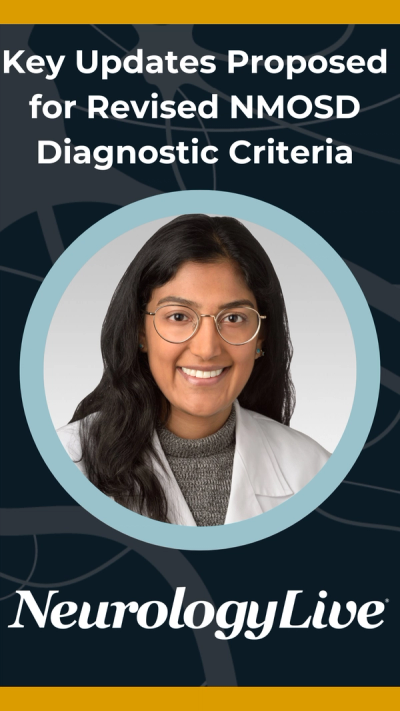
Key Updates Proposed for Revised NMOSD Diagnostic Criteria
a month ago
by
Shailee Samir Shah, MD(+1 more)
CME Content



Advertisement
More News
Explore the transformative buzzwords in neurology for 2025, highlighting advancements in AI, gene therapy, personalized treatment, and neuroplasticity.
A study reveals EEG and MRI biomarkers in MOGAD patients with epilepsy, highlighting potential early indicators for refractory epilepsy and improved treatment outcomes.

Findings revealed that vitamin D deficiency was associated with an increased risk of NMOSD in East Asian populations, whereas the effect of smoking among Caucasians and other populations was inconsistent.

A recent study confirms satralizumab's long-term safety and efficacy for treating neuromyelitis optica spectrum disorder, supporting its use as a maintenance therapy.

A case report reveals cognitive decline and brain atrophy in a patient with NMOSD, highlighting potential subclinical neurodegeneration despite limited relapses.

In a newly published study, researchers developed expert-driven, evidence-based, up-to-date consensus recommendations for managing neuromyelitis optica spectrum disorder in Saudi Arabia.

The assistant professor of neurology at Northwestern University explained key diagnostic, therapeutic, and management considerations for clinicians caring for patients with NMOSD across diverse and evolving clinical scenarios.

Experts shared their clinical perspectives on trending topics in the treatment and management of multiple sclerosis at the 41st Congress of the European Committee for Treatment and Research in Multiple Sclerosis.

Final results from a phase 3 extension study presented at ECTRIMS 2025 demonstrated long-term efficacy and safety of ravulizumab-cwvz in patients with neuromyelitis optica spectrum disorder.

A global panel of experts revised NMOSD diagnostic criteria and updated disease classifications, distinguishing aquaporin-4 antibody–positive disease from related conditions such as MOGAD.

MIL62 shows promising results in reducing relapse rates and disability progression in NMOSD, highlighting its potential as a groundbreaking treatment.
Ofatumumab shows promising efficacy in treating neuromyelitis optica spectrum disorder, significantly reducing relapse rates and improving patient outcomes.
A groundbreaking study reveals the connection between GLP-1 hormones and brain inflammation in neuromyelitis optica spectrum disorder, suggesting new treatment avenues.

Bio-Thera Solutions announced that its pivotal trial of BAT4406F, an anti-CD20 monoclonal antibody, for neuromyelitis optica spectrum disorder will close enrollment early after achieving statistically significant efficacy.

New findings highlight the potential of sCD83 as a prognostic biomarker in NMOSD and MOGAD, supporting its role as both a therapeutic target and a marker of treatment response in these autoimmune diseases.

Findings from a new study from Mayo Clinic may offer clinicians a straightforward metric lesion resolution to aid them in distinguishing MOGAD from MS in routine clinical practice.

In a new study, findings show elevated CSF 14-3-3 protein levels in AQP4-NMOSD, suggesting its potential as a biomarker for neuroaxonal damage and disease severity.

A recent research letter emphasized that meningitis could be a possible early manifestation of MOG antibody–associated disease, according to results previously published in an international study.

A recent survey revealed significant variability in treatment decisions for pediatric MOGAD, highlighting gaps in knowledge and the potential need for improved clinical guidelines.
Recent MR analysis uncovers protein associations with neuromyelitis optica spectrum disorder, suggesting new treatment pathways and drug targets for improved management.

A review highlighted the role of serum neurofilament light chain as a potential biomarker in MOG antibody-associated disease, with findings pointing to associations with attack severity.

A recently published population-based study reported that patients with MS or NMOSD had a significantly higher risk of autoimmune rheumatic diseases than matched controls.

A 17-year-old with NMOSD and rituximab treatment developed PML after several relapses and secondary hypogammaglobulinemia, leading to his death 3 months after diagnosis.

Sumaira Ahmed, founder and executive director of The Sumaira Foundation, discussed how FDA-approved therapies transformed the NMOSD treatment landscape and highlighted ongoing challenges in patient care.

A global cohort study identified distinct clinical patterns and higher relapse rates in pediatric patients with MOGAD with non-P42 MOG antibody binding profiles.
Advertisement
Advertisement
Trending on NeurologyLive - Clinical Neurology News and Neurology Expert Insights
1
Cladribine Tablets Show Ability to Improve or Stabilize Cognitive Function in Patients With Relapsing Multiple Sclerosis
2
Myelin Protective Small Molecule Lucid-MS Shows Promising Early-Stage Data in Healthy Volunteers
3
Cladribine Maintains Efficacy, Safety Profile in Older Patients With Multiple Sclerosis
4
Women Physicians Day 2026: Sex-Specific Clinical Considerations in Women With Epilepsy
5