
After 12 months of treatment, the 2 disease-modifying therapies were comparable in efficacy, with less treatment switching and discontinuation in cladribine-treated patients.
After 12 months of treatment, the 2 disease-modifying therapies were comparable in efficacy, with less treatment switching and discontinuation in cladribine-treated patients.
ACTRIMS president Jeffrey Cohen, MD, offered insight into what’s to come from the upcoming Americas Committee for Treatment and Research in Multiple Sclerosis Annual Forum 2022.
The head of global research and executive vice president of Atara Biotherapeutics discussed improvements seen in patients treated with the investigational therapy.
The head of global research and executive vice president of Atara Biotherapeutics discussed the trial design of part 2 of the study of ATA188.
Kimberly Allen-Philbey, a PhD candidate at the Barts MS Center in London, discussed the advantages of using a personalized dosing schedule of off-label, subcutaneous cladribine.
The senior investigator at the National Institutes of Neurological Disorders and Stroke spoke about further research his lab is conducting into MS mechanisms.
Jemima Akinsanya, DO, Neuroimmunology Clinical Fellow at the National Institutes of Health, discussed new studies of anakinra and tolebrutinib in MS.

The duo from the National Institutes of Health discussed how monitoring and treating paramagnetic rim lesions can improve patient care in multiple sclerosis.
The PhD candidate at the Barts MS Center in London discussed the upcoming Chariot MS study as well as further research she would like to conduct in personalized cladribine dosing.
Alise Carlson, MD, a resident at Cleveland Clinic, provided insight on how raising awareness for genetic leukodystrophies may ultimately improve misdiagnosis rates.
The duo from the National Institutes of Health discussed the advantages of the ultra-high resolution imaging technology in research.
The postdoctoral researcher at Columbia University discussed the long-term plans to gain a better understanding of MS diagnosis disclosure and how it can impact other qualities of life.
The fellow of autoimmune neurology at Massachusetts General Hospital also discussed concerns of associations between multiple sclerosis and COVID-19.
The PhD candidate at the Barts MS Center in London discussed her study presented at ACTRIMS Forum 2021 that evaluated CPD in patients with relapsing MS.
Alise Carlson, MD, a resident at Cleveland Clinic, detailed the reasons for her study evaluating genetic leukodystrophies and their differences to multiple sclerosis at diagnosis.
The senior investigator at the National Institutes of Neurological Disorders and Stroke outlined studies on anakinra and tolebrutinib as part of a new phase 2a clinical trial paradigm.
The Neuroimmunology Clinical Fellow at the National Institutes of Health discussed the evaluations of 2 therapies in multiple sclerosis that she is partaking in.

The postdoctoral researcher at Columbia University discussed ways clinicians and patients with multiple sclerosis can take to ease the transition of disclosing their diagnosis.
The neurologist from the University of Washington Medical Center discussed the findings of her recent study presented at ACTRIMS Forum 2021.

The president of the Americas Committee for Treatment and Research in MS shared his perspective on the impact of COVID and the top talks at the ACTRIMS Forum 2021.
The PhD candidate at the neuroimmunology laboratory at Memorial University of Newfoundland discussed the potential of interleukin-1 receptor antagonist as a biomarker in MS disability as well as a therapeutic target.
NeurologyLive’s coverage of ACTRIMS Forum 2021 featured a number of insightful conversations with leading experts in multiple sclerosis care.
The neurologist from Massachusetts General Hospital discussed when to prescribe disease-modifying therapy and some challenges in caring for patients with RIS.
The fellow of autoimmune neurology at Massachusetts General Hospital discussed the need for follow-up with patients long-term after TNFα inhibitor treatment.
The postdoctoral researcher at Columbia University detailed a number of topics regarding the impact concealing multiple sclerosis diagnosis can have on a patient.

Ishu Arpan, PhD, senior research associate at Oregon Health & Science University, also discussed further studies she would like to see conducted in MS falls.
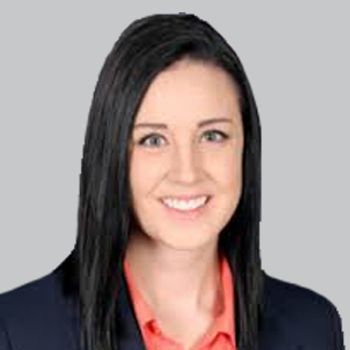
Alise Carlson, MD, a resident at Cleveland Clinic, discussed her presentation from ACTRIMS Forum 2021 on the misdiagnosis of adult-onset genetic leukodystrophies as multiple sclerosis.
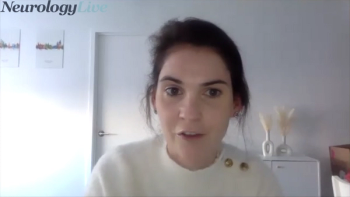
The postdoctoral researcher at Columbia University discussed her abstract from ACTRIMS Forum 2021 on the associations of MS diagnosis disclosure and concealment with anxiety and depression.

In assessing patients treated with siponimod, researchers also saw that plasma neurofilament light levels slightly predicted a reduced risk of disease worsening.
The senior investigator at the National Institutes of Neurological Disorders and Stroke discussed 2 treatments currently being evaluated for use in multiple sclerosis.