

The chief medical officer at Xenon Pharmaceuticals provided clinical insights on promising long-term, phase 2 data testing azetukalner, a first-in-class Kv7 channel opener, in patients with focal onset seizures. [WATCH TIME: 4 minutes]
The chief medical officer at Xenon Pharmaceuticals provided clinical insights on promising long-term, phase 2 data testing azetukalner, a first-in-class Kv7 channel opener, in patients with focal onset seizures. [WATCH TIME: 4 minutes]
A recent analysis reveals fenfluramine's positive effects on executive functioning in adults with Lennox-Gastaut syndrome, independent of seizure reduction.
Fenfluramine shows significant seizure reduction in CDKL5 deficiency disorder, offering hope for families facing treatment-resistant epilepsy challenges.

A pair of pediatric epileptologists highlight the systemic and patient level factors driving inequities in infantile epileptic spasms syndrome care and outline paths toward more equitable diagnosis and treatment.
Final safety data from an open-label study presented at AES 2025 supported long-term fenfluramine use in pediatric and adult patients with Dravet syndrome or Lennox-Gastaut syndrome.
An AES study revealed the real-world persistence of fenfluramine in treating Lennox-Gastaut syndrome, highlighting patient demographics and treatment trends.
The Baldwin Keyes Professor of Neurology at the Sidney Kimmel Medical College at Thomas Jefferson University and Founder’s Award recipient discussed the state of the epilepsy care community and his outlook for the future. [WATCH TIME: 4 minutes]
Janelle Wagner, PhD, a clinical psychologist and research professor at the Medical University of South Carolina, provided clinical insights on a recently presented study on whether elevated ADHD symptoms impact post epilepsy surgery seizure freedom.
The director of the Pediatric Epilepsy Center at UCSF reviewed recently presented interim phase 1/2 data for ETX101, a one-time AAV9 gene regulation therapy aiming to increase SCN1A expression in inhibitory interneurons in Dravet syndrome.

Elizabeth Gerard, MD, an epileptologist at Northwestern Medicine, provided clinical insights on a new consortium, GEAN, which aims to expand genetic testing and define adult phenotypes for rare genetic epilepsies across North America.
A neuroscientist associated with the Cleveland Clinic Epilepsy Center discussed the rapid expansion and excitement surrounding the continued integration of AI in the field of epilepsy care. [WATCH TIME: 5 minutes]
The senior vice president of clinical development for Lundbeck provided in-depth commentary on the mechanism of bexicaserin, and the promising early-stage data shown in those with developmental epileptic encephalopathies. [WATCH TIME: 4 minutes]

Christopher Kenney, MD, FAAN, chief medical officer at Xenon Pharmaceuticals, reviews encouraging long-term data behind azetukalner, a first-in-class Kv7 channel opener, as a potential treatment for focal onset seizures.

At AES 2025, a clinical neuropsychologist at the Cleveland Clinic Epilepsy Center discussed the growing challenges facing older adults with epilepsy and the need for more comprehensive, research-informed care strategies. [WATCH TIME: 4 minutes]
Andrea Rossetti, MD, director of the EEG/Epilepsy Unit at the Department of Clinical Neurosciences the Lausanne University Hospital in Switzerland, offers insight into post-resuscitation epilepsy care.

Elizabeth Thiele, MD, PhD, director of the Pediatric Epilepsy Program at Massachusetts General Hospital, discusses new data on Epidiolex use in DEEs beyond Dravet, LGS, and TSC.
The director of the Adult Epilepsy Genetics Clinic at Northwestern University discussed short- and long-term goals for research, natural history development, and community engagement of the AES-sponsored GEAN Consortium. [WATCH TIME: 3 minutes]

Michael Sperling, MD, Baldwin Keyes Professor of Neurology at Vice Chair for Research at the Sidney Kimmel Medical College, spoke about the significance of receiving the Founders Award and the current state of epilepsy.
New data from the open-label extension of Harmony Biosciences’ Phase 3 ARGUS trial show that EPX-100 (clemizole) achieved a median 50% reduction in countable motor seizures in patients with Dravet Syndrome.
New findings reveal bexicaserin significantly reduces seizure frequency in patients with developmental and epileptic encephalopathies, supporting its advancement to phase 3 trials.

A recent survey reveals fever significantly reduces seizure frequency in CDKL5 Deficiency Disorder, highlighting potential therapeutic strategies for patients.

A new study presented at AES 2025 reported that a cognitive-behavioral intervention via mobile application for patients with epilepsy can reliably capture daily self-reported outcomes.
The neurosurgeon at Cleveland Clinic discussed the goals of the AES thalamic neuromodulation special interest group and the major clinical and research priorities shaping the future of neuromodulation for drug resistant epilepsy.
The chief medical officer at Xenon Pharmaceuticals outlined why azetukalner’s selective potassium channel activation offers a different way to suppress hyperexcitable neuronal circuits in focal epilepsy. [WATCH TIME: 3 minutes]
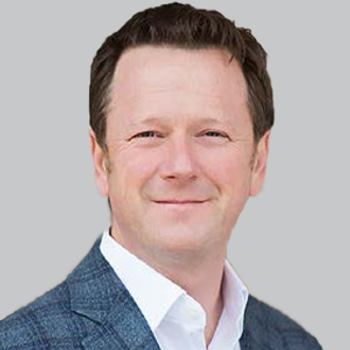
The positive interim findings research represents the first clinical data for ETX101, an investigational cell-type-selective gene therapy, and the first potential one-time disease-modifying treatment for Dravet syndrome.

A new study presented at AES 2025 examined factors linked to declining surgery for pediatric drug-resistant epilepsy and highlighted variability in candidate selection across centers.
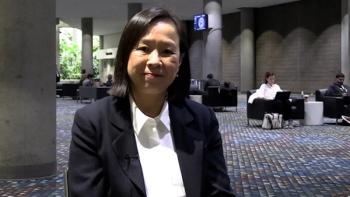
The clinician educator at the University of Toronto discussed the complex challenge of caring for women with epilepsy that demands both clinical expertise and personalized care. [WATCH TIME: 4 Minutes]
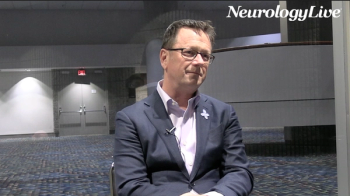
The director of the Pediatric Epilepsy Center of Excellence at the University of California San Francisco detailed early phase data of Encoded Therapeutics’ ETX101 gene replacement therapy in children with Dravet syndrome. [WATCH TIME: 3 minutes]

A new phase 2 study presented at AES 2025 showed that stiripentol may reduce seizure burden in patients with Lennox-Gastaut syndrome.

Ovid Therapeutics' OV329 shows promise as a safe, effective GABA-AT inhibitor for treating drug-resistant seizures, with strong phase 1 trial results.