




Dementia and Alzheimer Disease
Latest News
Advertisement
Latest Videos








CME Content






Advertisement
More News

Two experts from Cerevance discussed data from the company’s posters recently presented at AAIC 2025, which highlighted potential therapeutic targets for Alzheimer disease. [WATCH TIME: 5 minutes]

Daniel Freedman, PhD, of MIT, gave clinical commentary on how Openwater’s Open-LIFU enables new research into conscious perception and potential clinical applications for conditions like pain and depression.

Donanemab has received a positive opinion from the European Medicines Agency’s CHMP for the treatment of early symptomatic Alzheimer disease, bringing Eli Lilly’s anti-amyloid therapy one step closer to approval in the European Union.

Yang Liu, PhD, co-founder, CEO, and chief scientific officer of OncoC4, provided commentary on the rationale and promising preclinical data behind ONC-841, a novel anti-SIGLEC10 antibody targeting amyloid and tau in Alzheimer disease.

At AAIC 2025, the head of AD, MS and Immunology Development Units at Biogen discussed ongoing research efforts targeting tau pathology in AD, specifically the company's investigational candidate BIIB080. [WATCH TIME: 6 minutes]
The chief scientific officer at Alzheon discussed the mechanism of valiltramiprosate and new data on toxic amyloid oligomers presented at the recently concluded Alzheimer’s Association International Conference.

New findings reveal the promising efficacy and safety of a subcutaneous lecanemab autoinjector for early Alzheimer disease treatment, enhancing patient care.
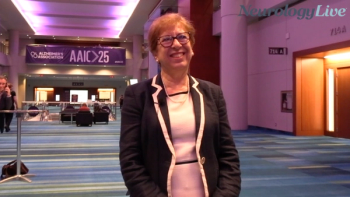
The professor of molecular neurology at the University of Cambridge highlighted recent research on tau protein aggregation in Alzheimer disease and other related tauopathies. [WATCH TIME: 6 minutes]

A real-world study reveals lecanemab's effectiveness in early Alzheimer's, showing stability or improvement in 83.6% of patients after two years.

Data presented at AAIC 2025 from a phase 2 study suggest that ABvac40 may slow cognitive decline in patients with Alzheimer disease, particularly among those who developed higher antibody levels.
UCB's bepranemab shows promise in slowing tau accumulation in early Alzheimer disease, marking an advancement in tau-targeted therapies.

The Emeritus Professor of Cognitive Neurology at VU University Medical Center talked about findings presented at AAIC 2025 from the phase 3 BROADWAY trial of obicetrapib in Alzheimer disease. [WATCH TIME: 3 minutes]

A groundbreaking phase 2 study evaluates PRI-002's potential to treat mild Alzheimer symptoms, aiming for significant safety and efficacy insights by 2026.
Test your neurology knowledge with NeurologyLive®'s weekly quiz series, featuring questions on a variety of clinical and historical neurology topics. This week's topic is on anti-amyloid treatments for Alzheimer disease.

Valiltramiprosate shows promising effects on brain structure and cognitive function in early Alzheimer disease, highlighting its potential for MCI treatment.
Take 5 minutes to catch up on NeurologyLive®'s highlights from the week ending August 1, 2025.

Roche's Elecsys pTau181 blood test gains CE Mark, enhancing early Alzheimer’s diagnosis and improving patient outcomes across the European Union.

New phase 2 data reveals AR1001's potential as a cognitive enhancer and disease-modifying therapy for mild to moderate Alzheimer's disease.

New data reveals lecanemab's long-term benefits for early Alzheimer's patients, showcasing improved cognitive outcomes and promising safety profiles over four years.

Phase 2 Trial of Posdinemab Reveals Racial Differences in Screen Failure for Early Alzheimer Disease
New findings reveal racial disparities in Alzheimer’s trial eligibility, highlighting higher screen failure rates among Black participants in the Auτonomy study.

AAV2-BDNF gene therapy shows promise in reversing cognitive decline in early Alzheimer's, enhancing neuronal function and safety in initial trials.

The associate professor in the Department of Psychiatry at McGill University discussed the strengths and limitations of PET and blood biomarkers in identifying early Alzheimer disease.

Phase 2 VIVA-MIND study shows varoglutamstat is safe for early Alzheimer’s patients but fails to improve cognitive outcomes.

A new analysis revealed structural brain differences among patients with breast cancer who experienced chemotherapy-associated cognitive impairment following anthracycline-taxane treatment.

New research reveals nicotinamide riboside supplementation enhances hippocampal perfusion in adults with mild cognitive impairment, but memory performance remains unchanged.
Advertisement
Advertisement
Trending on NeurologyLive - Clinical Neurology News and Neurology Expert Insights
1
Cladribine Tablets Show Ability to Improve or Stabilize Cognitive Function in Patients With Relapsing Multiple Sclerosis
2
Myelin Protective Small Molecule Lucid-MS Shows Promising Early-Stage Data in Healthy Volunteers
3
Using Human iPSC Models to Dissect PIRA Mechanisms in Progressive Multiple Sclerosis: Valentina Fossati, PhD
4
Phase 3b RESHAPE Study Evaluates Risk–Benefit of Switching From Ocrelizumab to BTK Inhibitor Remibrutinib
5