Special Report

1 expert is featured in this series.

This Special Report will explore emerging insights from the phase 3 INDIGO trial evaluating vorasidenib in IDH-mutant diffuse glioma, with a focus on its impact on seizure burden and underlying tumor biology. Through discussion of exploratory analyses, the conversation will examine the relationship between tumor volume reduction, 2-HG suppression, and seizure control, while highlighting the clinical importance of earlier intervention following gross total resection and its potential implications for patient quality of life and long-term disease management.
1 expert is featured in this series.

This NeurologyLive® Special Report explores phase 3, placebo-controlled data on fenfluramine in patients with CDKL5 deficiency disorder (CDD), presented at the 2026 American Academy of Neurology Annual Meeting. Featuring insights from Sam Amin, MD, the discussion focuses on seizure reduction, global clinical outcomes, and safety observations in this ultra-rare, treatment-resistant epilepsy. The series aims to contextualize these findings within the broader landscape of developmental and epileptic encephalopathies and highlight considerations for clinical care and future research.

1 expert is featured in this series.

This Special Report will provide a comprehensive clinical overview of the 52-week data from the phase 3 MINT trial evaluating inebilizumab in AChR-positive generalized myasthenia gravis. The discussion will explore the biologic rationale for CD19-targeted B-cell depletion, key efficacy and safety outcomes through one year, and pharmacodynamic and immunogenicity findings, while contextualizing how these data may inform evolving treatment strategies and future research in gMG.

1 expert is featured in this series.

This Special Report will explore emerging insights from the phase 3 INDIGO trial evaluating vorasidenib in IDH-mutant diffuse glioma, with a focus on its impact on seizure burden and underlying tumor biology. Through discussion of exploratory analyses, the conversation will examine the relationship between tumor volume reduction, 2-HG suppression, and seizure control, while highlighting the clinical importance of earlier intervention following gross total resection and its potential implications for patient quality of life and long-term disease management.
In this NeurologyLive® Special Report, Bruce Cree, MD, PhD, Clinical Research Director at the UCSF Multiple Sclerosis Center, discusses recently published 5-year data from the ULTIMATE trials and open-label extension of Ublituximab. The conversation reviews key efficacy outcomes, including relapse rates, disability progression, and functional measures, along with longer-term safety observations. Dr. Cree also provides clinical context on how these findings fit within the broader landscape of anti-CD20 therapies for relapsing multiple sclerosis. The series aims to support clinicians in interpreting long-term data and its relevance to treatment decision-making.

In this 5-part panel discussion series, Shamik Bhattacharyya, MD, Anne M. Finucane Endowed Chair in Neurology and Associate Professor of Neurology at Harvard Medical School, and Philippe-Antoine Bilodeau, MD, of the Division of Neuroimmunology at Mass General Brigham and Instructor in Neurology at Harvard Medical School, unpack their recent real-world comparative effectiveness study published in Neurology. Drawing on decades of institutional data, the panel examines how FDA-approved NMOSD therapies perform relative to rituximab and traditional immunosuppressants, while addressing key methodological and safety considerations that shape clinical practice.

In this NeurologyLive® Special Report mini-series, Scott Perry, MD, Co-Director of the Jane and John Justin Neurosciences Center at Cook Children’s Hospital, discusses zorevunersen, an investigational antisense oligonucleotide therapy in development for Dravet syndrome. Across five focused episodes, Dr. Perry explains the science behind zorevunersen’s gene-targeting mechanism, reviews early-phase clinical findings, and highlights its potential to modify disease course beyond seizure control. He also provides insight into the ongoing phase 3 EMPEROR trial and shares perspectives on how disease-modifying strategies may transform the treatment landscape. The series offers neurologists an in-depth look at a novel approach aiming to address the root cause of Dravet syndrome.

In this NeurologyLive® Special Report mini-series, Riley Bove, MD, Associate Professor of Neurology at the University of California, San Francisco, provides expert insights on ofatumumab and its evolving role in multiple sclerosis care. Dr. Bove discusses how the therapy compares with other DMTs, reviews pivotal data from the ARTIOS trial, and reflects on its growing clinical applications since FDA approval. She also addresses emerging considerations around patient subgroups, long-term safety, and real-world utilization of this self-administered B-cell–depleting treatment. Across four focused episodes, neurologists gain valuable takeaways on where ofatumumab fits into current and future MS treatment strategies.

Stephen Salloway, MD

This conference coverage information is produced independently by Neurology Live and Supported by Eli Lilly and Company who has no direct influence on the content itself.

Alzheimer disease experts provide commentary on findings from the TRAILBLAZER-ALZ 6 study at the 2025 Alzheimer’s Association International Conference.

In this special report series from NeurologyLive, sleep specialists Eric Olson, MD, and Anita Shelgikar, MD, president-elect of the AASM, offer expert commentary on six late-breaking presentations from the 2025 SLEEP Annual Meeting in Seattle. The panel examines key findings in narcolepsy and hypersomnia, including new data on the cardiovascular safety and high-dose efficacy of low-sodium oxybate, real-world prescribing trends, and the role of social determinants of health in clinical outcomes. The discussion also explores investigational therapies such as TAK-861 and ALKS 2680, highlighting their mechanisms, study designs, and potential clinical implications. Together, these insights provide a timely update on the evolving treatment landscape for central disorders of hypersomnolence.

1 expert is featured in this series.

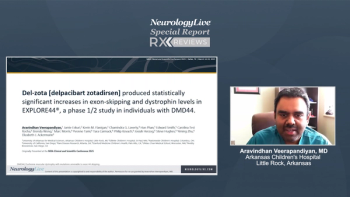
Aravindhan Veerapandiyan, MD, discusses how del-zota (delpacibart zotadirsen), an exon 44 skipping agent using antibody-conjugated phosphorodiamidate morpholino oligomer (PMO) technology, demonstrated favorable safety, significant dystrophin production (25% of normal), and unprecedented reduction of creatine kinase levels to near-normal in patients with Duchenne muscular dystrophy (DMD) during phase 1/2 clinical trials.

Multiple sclerosis experts Patricia Coyle, MD, FAAN, and Adnan Subei, DO, FAAN, cover the long-term impacts of S1P-modulating treatments for MS, the differences in each treatment, and how the class has evolved since the first therapeutic over 10 years ago.

Multiple Sclerosis expert Donald Negroski, MD, provides clinical insight on a number of abstracts from the 2024 Consortium of Multiple Sclerosis Centers Annual Meeting focused on treatment changes and care for aging patients with MS.

EAN News Network

Multiple sclerosis experts discuss data from four presentations on ozanimod, a disease modifying therapy that was presented at EAN 2022.

Key opinion leaders and presenters offer their insight on the latest advances in the management of patients with multiple sclerosis at the 2022 Consortium of Multiple Sclerosis Centers annual meeting.

Key opinion leaders and presenters at the ACTRIMS Forum 2022 share their perspectives on the latest data and updates in the management of patients with multiple sclerosis (MS).

CMSC 2021: Updates in MS

Leading physicians in the treatment of multiple sclerosis (MS) offer insights into presentations and data readouts from the 2021 Consortium of Multiple Sclerosis Centers (CMSC) Annual Meeting.