
A real-world study showed that cladribine tablets were associated with greater treatment persistence and lower health care costs in patients with multiple sclerosis compared with other common therapies.
A real-world study showed that cladribine tablets were associated with greater treatment persistence and lower health care costs in patients with multiple sclerosis compared with other common therapies.
A new comparison study of patients with autoimmune diseases reported high rates of anxiety and depression, with notable differences in when psychiatric symptoms emerged relative to disease onset.
A phase 3b study presented at ACTRIMS 2026 is evaluating whether switching to remibrutinib offers efficacy and safety comparable to continued ocrelizumab treatment in relapsing multiple sclerosis.

Findings from a phase 1 study indicated that Lucid-21-302 was generally well tolerated and exhibited dose-proportional exposure, warranting additional study in a phase 2 trial for multiple sclerosis.
The senior research investigator at the New York Stem Cell Foundation discussed how human iPSC-based models can help dissect the cellular mechanisms underlying PIRA and progressive disability in multiple sclerosis. [WATCH TIME: 3 minutes]
New phase 3 FREXCITE trial tests frexalimab CD40L inhibitor in nrSPMS, comparing on-body subcutaneous vs IV dosing
The analysis included 280 patients from CLARIFY-MS extension and 219 patients from MAGNIFY-MS extension, a total of 499 patients with at least 4 years of follow-up.
A cohort analysis, presented at ACTRIMS 2026, provided insight into the clinical characteristics, disease burden, and treatment sequencing of patients with neuromyelitis optica spectrum disorder treated with inebilizumab.
Real-world phase 4 data show cladribine keeps relapse rates low and safety steady in relapsing MS patients, including those 65+.
The professor of neurology and neurosurgery at McGill University discussed the evolution of multiple sclerosis treatment, the need for earlier intervention, and the pressing scientific questions surrounding neuroinflammation. [WATCH TIME: 4 minutes]
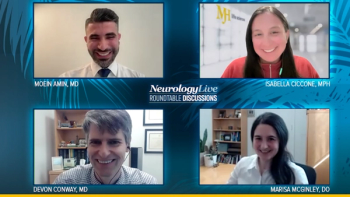
Experts discussed how aging impacts multiple sclerosis management, treatment decisions, and overall patient health. [WATCH TIME: 5 minutes]
Experts discussed the current and future applications of AI and machine learning in multiple sclerosis research and clinical care, highlighting both opportunities and limitations. [WATCH TIME: 9 minutes]
Experts discussed the promise and uncertainty surrounding BTK inhibitors and CAR T-cell therapy in addressing progressive multiple sclerosis. [WATCH TIME: 8 minutes]
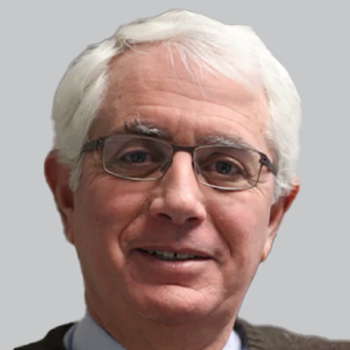
Jack P. Antel, MD, professor of neurology and neurosurgery at McGill University, reflected on key advances in neuroimmune research and their implications for understanding and treating MS.

Sumaira Ahmed, founder and executive director of The Sumaira Foundation, discussed how FDA-approved therapies transformed the NMOSD treatment landscape and highlighted ongoing challenges in patient care.
The founder and executive director of the Sumaira Foundation emphasized the critical role of lifestyle factors such as sleep, exercise, and nutrition for maintaining brain health in patients with NMOSD. [WATCH TIME: 3 minutes]
Experts discussed recent advancements in diagnostic criteria, imaging techniques, and the evolving understanding of multiple sclerosis subtypes and treatment responses. [WATCH TIME: 10 minutes]
The assistant professor in the department of neurology at Mount Sinai discussed distinguishing cognitive impairment in MS from AD emphasizing orientation as a key differentiator. [WATCH TIME: 5 minutes]
The professor of neurology at University of Colorado School of Medicine talked about the challenges of telehealth and device-based data collection in clinical practice. [WATCH TIME: 4 minutes]
Despite advancements in NMOSD treatments, the founder and executive director of the Sumaira Foundation discussed how misdiagnosis, delayed diagnosis, and disparities in care remain significant challenges. [WATCH TIME: 4 minutes]
The professor of neurological sciences at the University of Vermont discussed the work of the MS Differential Diagnosis Consortium, highlighting efforts to refine MS differential diagnosis and improve clinical accuracy. [WATCH TIME: 8 minutes]
The medical director of the Barlo Multiple Sclerosis Program at St Michaels Hospital discussed findings from phase 3 trials suggesting that baseline PRLs can predict disability accumulation and may serve as biomarkers for treatment response to tolebrutinib. [WATCH TIME: 6 minutes]
The associate researcher at the University of California, San Francisco discussed a refined EAE model that could better replicate MS pathology, enabling deeper insights into demyelination, neuronal loss, and remyelination. [WATCH TIME: 6 minutes]
The professor of neurology and neurosurgery at McGill University discussed the evolving understanding of neuroimmune interactions in MS, highlighting how these interactions contribute to disease progression and potential repair mechanisms. [WATCH TIME: 4 minutes]
The assistant professor in the department of neurology at Mount Sinai talked about a recent study that highlighted how socioeconomic status and diet could significantly impact physical and cognitive outcomes in patients with MS. [WATCH TIME: 2 minutes]
The professor of neurology at University of Colorado School of Medicine discussed the evolving landscape of MS treatment, highlighting the role of personalized medicine and biomarker-driven decision-making. [WATCH TIME: 5 minutes]
The instructor in the department of radiology at Weill Cornell Medicine discussed how structural and functional brain connectomes can potentially improve predictions of MS progression and treatment response. [WATCH TIME: 4 minutes]
A post-hoc analysis of patients from the CHAMPION-NMOSD trial revealed that the majority received their initial meningococcal vaccination within 6-months of their last rituximab dose.
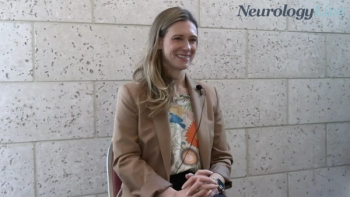
The professor of neurosurgery and physiology at University of Colorado School of Medicine talked about how vagus nerve stimulation may promote remyelination and functional recovery in multiple sclerosis. [WATCH TIME: 4 minutes]
A late-breaking study presented at the 2025 ACTRIMS Forum reported that a modified Atkins diet reduced inflammation and altered immune cell metabolism in multiple sclerosis.