

A phase 4 trial underway in the U.S. is examining whether patients with CIDP on stable IVIg can transition to efgartigimod PH20 SC within one week of their last infusion, without requiring documented disease worsening first.

Marco Meglio, Assistant Managing Editor for NeurologyLive, has been with the team since October 2019. Follow him on Twitter @marcomeglio1 or email him at [email protected]
A phase 4 trial underway in the U.S. is examining whether patients with CIDP on stable IVIg can transition to efgartigimod PH20 SC within one week of their last infusion, without requiring documented disease worsening first.

Mind Moments®, a podcast from NeurologyLive®, brings you an exclusive interview with Jessica Ailani, MD. [LISTEN TIME: 17 minutes]
Experts explore how stem cell therapies could transform the treatment of Parkinson disease, covering clinical trial progress, patient counseling challenges, and the potential to replace current standard-of-care approaches.

Romy Hoque, MD, Professor of Neurology at Emory University, previews the 2026 SLEEP Annual Meeting, highlighting key themes across neurodegeneration, hypersomnolence, sleep apnea, and the growing role of GLP-1 receptor agonists in sleep medicine.
Jinsy A. Andrews, MD, Director of the ALS Clinic and Director of Clinical Trials at NYU Langone Health, discussed the evolving ALS treatment landscape, including emerging gene-targeted therapies, and the next generation of disease biomarkers.

Daniel Vitt, PhD, chief executive officer of Immunic, discussed the dual mechanism of vidofludimus calcium, ongoing phase 3 ENSURE trials in relapsing MS, and phase 2 CALLIPER findings suggesting potential neuroprotective effects in progressive MS.

Characterization of early-start TRAILBLAZER-ALZ 2 participants who required continued donanemab in the long-term extension suggests durable clinical benefit with fewer cumulative doses.

Early data from the Clinical Nurse Navigator program show that more than 99% of patients with Parkinson's disease reaching a first optimization dose of continuous subcutaneous apomorphine infusion did so without antiemetic pretreatment.

Test your neurology knowledge with NeurologyLive®'s weekly quiz series, featuring questions on a variety of clinical and historical neurology topics. This week's topic is Brain insulin resistance!

Exploratory post hoc data suggest prompt pimavanserin initiation within 6 to 12 months of PDP onset may yield a more favorable symptom trajectory, though prospective confirmation is needed.
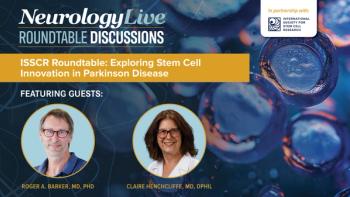
In this final episode, Roger Barker, MD, PhD, and Claire Henchcliffe, MD, DPhil, discuss why neurologists should stay informed on stem cell medicine and the broader implications of regenerative therapies across neurology.

Phase 2b PROCEED trial results and a phase 1 drug interaction study for bocunebart were presented at AHS 2026, collectively strengthening the drug's development case as a first-in-class PACAP-targeting therapy.
Neurologists Roger Barker, MD, PhD, and Claire Henchcliffe, MD, DPhil, discuss how stem cell therapies may differ from existing Parkinson disease treatments and the potential benefits of dopamine cell replacement.
Roger Barker, MD, PhD, and Claire Henchcliffe, MD, DPhil, examine the expanding clinical trial landscape for stem cell therapies in Parkinson disease and the programs leading development efforts.

European regulators have expanded atogepant’s label to include acute migraine treatment, supported by phase 3 data showing significant pain freedom and sustained relief versus placebo.
From patient questions to clinical trial referrals, this episode highlights practical strategies for counseling individuals interested in stem cell-based therapies for Parkinson disease.
Neurologists Roger Barker, MBBS, MRCP, PhD, FMedSci, and Claire Henchcliffe, MD, DPhil, discuss the development, goals, and educational value of ISSCR's new stem cell medicine course for Parkinson disease.

Updated clinical data highlight opakalim’s ongoing development in epilepsy, with pivotal focal epilepsy results expected later this year.

CMSC 2026 registry data showed low relapse rates and no new safety signals among adults with AQP4-positive NMOSD treated with eculizumab or ravulizumab in real-world practice.
Test your neurology knowledge with NeurologyLive®'s weekly quiz series, featuring questions on a variety of clinical and historical neurology topics. This week's topic is mmoldering inflammation in MS!

New data presented at CMSC 2026 suggest ocrelizumab provides comparable relapse and MRI control in pediatric- and young-adult–onset multiple sclerosis, with greater disability improvement observed in pediatric patients.
Mind Moments®, a podcast from NeurologyLive®, brings you an exclusive interview with Todd Arnedt, PhD. [LISTEN TIME: 18 minutes]

A retrospective study presented at CMSC 2026 found GLP-1 receptor agonist use in multiple sclerosis was associated with higher physical activity levels and improvements across several patient-reported symptom domains.

Three-year extension data presented at CMSC 2026 showed sustained suppression of MRI activity and low relapse rates with frexalimab in relapsing multiple sclerosis.
Joohi Jimenez-Shahed, MD, professor of neurology at Mount Sinai, commented on the evolving understanding of Tourette syndrome, persistent misconceptions, and emerging therapeutic and neuromodulation approaches for tic disorders.

New exon‑51 skipping therapy boosts dystrophin and patient strength, with upcoming trial readouts aiming to support accelerated FDA approval.
Test your neurology knowledge with NeurologyLive®'s weekly quiz series, featuring questions on a variety of clinical and historical neurology topics. This week's topic is mitochondrial dysfunction in neurodegeneration!

Karen Lynch, MD, MRCPI, senior global medical director at Sanofi, discussed ongoing unmet needs in CIDP, diagnostic challenges, and emerging research efforts evaluating complement inhibition and biomarker-driven care approaches.

New phase 4 head-to-head data suggest Dysport may provide longer-lasting symptom control than Botox in adults with upper limb spasticity while maintaining comparable safety.

FDA Priority Review of asundexian marks a key regulatory milestone for factor XIa inhibition in secondary stroke prevention following positive phase 3 OCEANIC-STROKE results.

Published: November 24th 2025 | Updated: December 5th 2025
Published: August 29th 2025 | Updated: September 2nd 2025

Published: March 4th 2025 | Updated: March 19th 2025
Published: January 30th 2025 | Updated: February 21st 2025
Published: February 4th 2025 | Updated: February 6th 2025

Published: January 21st 2025 | Updated: January 24th 2025