

The director of the Cerebrovascular Center at Mount Sinai talked about findings from recent trials presented at ISC 2025 investigating thrombectomy for distal vessel occlusions. [WATCH TIME: 4 minutes]
The director of the Cerebrovascular Center at Mount Sinai talked about findings from recent trials presented at ISC 2025 investigating thrombectomy for distal vessel occlusions. [WATCH TIME: 4 minutes]

Troriluzole, a new chemical entity and third-generation novel prodrug that modulates glutamate, would become the first approved agent for SCA, pending the FDA’s clearance.
The director of the Parkinson’s Disease and Movement Disorders Center of Boca Raton, Florida, commented on the promising safety of SPN-830 and who may be best suited for treatment with the newly approved therapy. [WATCH TIME: 4 minutes]

A significant number of pregnancies in NMOSD patients experienced relapses postpartum, with 50% of pregnancies showing complications for both mother and fetus.
The professor and chair of the neurology department at the University of Arizonia, Phoenix, gave clinical insights on the notable progress in the stroke treatment world, highlighted by advances presented at the 2025 International Stroke Conference. [WATCH TIME: 3 minutes]
Julie Pilitsis, MD, PhD, MBA, chair of neurosurgery at The University of Arizona Tucson, discussed the impact of a newly approved continuous infusion therapy for Parkinson disease.

Monthly cycles of low-dose IL-2, or COYA 301, resulted in statistically significant decreases in proinflammatory biomarkers and increases in anti-inflammatory cytokine IL-4 vs placebo.
The professor at the Second Affiliated Hospital of Zhejiang University’s School of Medicine discussed findings from a trial suggesting that intravenous thrombolysis could benefit patients with ischemic stroke up to 24 hours after symptom onset. [WATCH TIME: 8 minutes]

Here's some of what is coming soon to NeurologyLive® this week.
Phase 1/2 long-term data showed tividenofusp alfa significantly reduced central and peripheral biomarkers to near-normal levels while improving liver volume, hearing thresholds, adaptive behavior, and cognition in most participants.
The director of the neurological disease center at Beijing Anzhen Hospital talked about assessing the potential benefits and safety of intra-arterial tenecteplase in highly selected poststroke patients. [WATCH TIME: 6 minutes]
Neurology News Network. for the week ending February 9, 2025. [WATCH TIME: 4 minutes]
Test your neurology knowledge with NeurologyLive®'s weekly quiz series, featuring questions on a variety of clinical and historical neurology topics. This week's topic is on the International Stroke Conference (ISC).
The 32-week study will enroll 15–20 adults aged 18–80 with Parkinson's-related hyposmia, featuring a 24-week treatment period of twice-daily CYR-064 nasal sprays.

In addition to failing to separate itself on the primary end point, EVT + best medical care was associated with higher rates of serious adverse events (33.9% vs 25.7%) and mortality (13.3% vs 8.4%) compared to best medical care alone.
Take 5 minutes to catch up on NeurologyLive®'s highlights from the week ending February 7, 2024.
The movement disorders nurse practitioner at The Ohio State University Wexner Medical Center talked about a meeting that equips nurse practitioners and physician assistants to improve movement disorder patient care. [WATCH TIME: 5 minutes]
The director of the Parkinson’s Disease and Movement Disorders Center of Boca Roaton, Florida, gave clinical insight on the function of a newly approved therapy for Parkinson disease, a common neurodegenerative disorder. [WATCH TIME: 3 minutes]
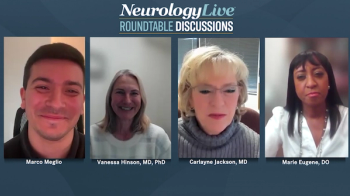
The group of women neurologists provided commentary on the critical areas of women-focused research in neurology, from clinical trial participation to addressing workforce challenges.

Mind Moments®, a podcast from NeurologyLive®, brings you an exclusive interview with Véronique Miron, PhD. [LISTEN TIME: 17 minutes]
Jonathan Rubin, MD, MBA, chief medical officer at Supernus Pharmaceuticals, talked about the recent approval of the company’s subcutaneous infusion therapy SPN-830 for Parkinson disease.

In a recently presented study at ISC 2025, poststroke patients reported no additional benefit from using transcranial direct current stimulation as a potential intervention for recovery.
Panelists explore the challenges and opportunities for women in neurology, offering practical advice for young professionals navigating the field.
The trial evaluates safety, remyelination, and functional outcomes, including changes in low contrast letter acuity, MRI myelination measures, and MS disease activity.
The president and CEO at Project Sleep talked about the foundational role of social connections and peer support in improving quality of life for individuals with narcolepsy. [WATCH TIME: 5 minutes]

Compared with Alzheimer disease, those with behavioral variant FTD demonstrated increased light sleep (N1%) and reduced deep sleep (N3%), alongside altered sleep dynamics, such as higher transitions between N1 sleep and wake states.
The director of the Parkinson’s Disease and Movement Disorders Center of Boca Raton, Florida, discussed SPN-830, the first and only FDA-approved subcutaneous apomorphine infusion device for patients with Parkinson disease. [WATCH TIME: 2 minutes]
The professor of neurology at the Geisel School of Medicine at Dartmouth shared his reaction to the recent FDA approval of AXS-07, a combination of meloxicam and rizatriptan, as a new therapy for acute migraine management. [WATCH TIME: 4 minutes]

Over a 52-week treatment period, patients who continued on bexicaserin and those who switched from placebo demonstrated notable decreases in motor seizures, further supporting the agent’s development.
In this episode, women neurologists share their personal experiences navigating challenges in neurology, offering insights into mentorship, work-life balance, and career advancement.