
The 5-year grant will support a research project that will use biomarkers to develop a predictive mathematical model to identify specific individuals with Parkinson disease who may develop dementia.
The 5-year grant will support a research project that will use biomarkers to develop a predictive mathematical model to identify specific individuals with Parkinson disease who may develop dementia.
James Leverenz, MD, director of the Lou Ruvo Center for Brain Health at Cleveland Clinic, discussed the strides made in Alzheimer disease research and the importance of diversity in research populations.
The new center is part of the first cohort of centers nationally to receive this new NIH funding and is the first and only in Nevada.
The director of the Lou Ruvo Center for Brain Health and neurologist at Cleveland Clinic highlighted the most pressing needs within the Alzheimer disease community.
Multidisciplinary teams who had the pocket card available had shorter times to rescue therapy initiation and similar rates of adequate dosing.
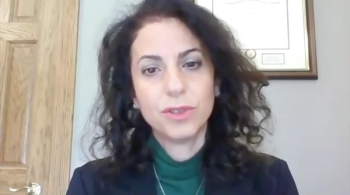
The chief research officer and epilepsy specialist at Cleveland Clinic detailed the reasons why epilepsy surgery is not utilized as often as it should, and her efforts to raise awareness.
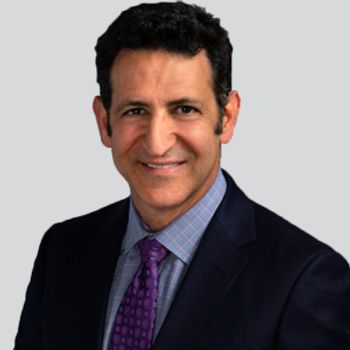
In part 2 of this interview, Marwan Sabbagh, MD, provides insight on what he feels is the most promising field of research in Alzheimer disease right now.
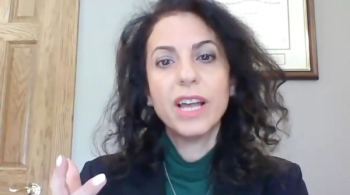
The chief research officer and epilepsy specialist at Cleveland Clinic detailed how recent study findings might impact the patient perspective on epilepsy surgery.
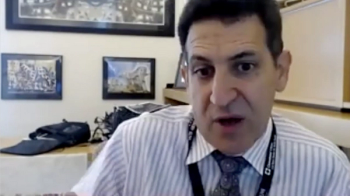
The director of the Lou Ruvo Center for Brain Health and neurologist at Cleveland Clinic discussed how Alzheimer disease research may change if aducanumab becomes approved.

In part 2 of this interview, Hubert Fernandez, MD, director of the Center for Neurological Restoration at Cleveland Clinic, detailed the greatest unmet needs as well as the utility of deep brain stimulation in patients with Parkinson disease.

The director emeritus of the Lou Ruvo Center for Brain Health at Cleveland Clinic and vice chair of the Department of Brain Health at the University of Nevada-Las Vegas discussed the role repurposed agents play in Alzheimer disease development.
Hubert Fernandez, MD, the director of the Center for Neurological Restoration at Cleveland Clinic, detailed the importance of raising awareness for Parkinson disease and the strides made in research.

The director of the Center for Neurological Restoration at Cleveland Clinic describes the greatest unmet needs in Parkinson disease research.

The director of the Center for Neurological Restoration at Cleveland Clinic detailed the recent technological and therapeutic innovations and their advantages in treating Parkinson disease.

The director of the Center for Neurological Restoration at Cleveland Clinic details the direction of clinical research for Parkinson disease and efforts that are being made to alleviate quality of life issues for those with the disease.

The director of the Center for Neurological Restoration at Cleveland Clinic discussed the importance of raising awareness of Parkinson disease on World Brain Day, highlighting the magnitude of the disease.
"Mind Moments," a podcast from NeurologyLive, brings you an exclusive interview with Bryan Davis, PsyD, MS.
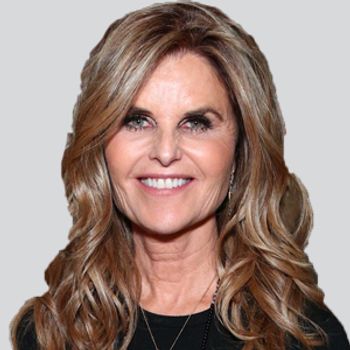
The Women's Alzheimer's Prevention Center becomes the first medical clinic in the US to offer a women-specific center for Alzheimer disease prevention, research, and caregiving support.
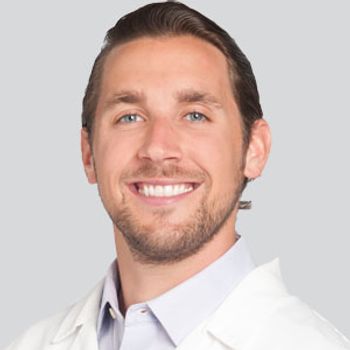
In Part 2 of this interview, Bryan Davis, PsyD, MS, clinical health psychology fellow at Cleveland Clinic’s Mellen Center for MS, details the impact that conversations about masculinity norms in MS can have on future trials and care.
The $7.2 million grant will evaluate central vein sign as a biomarker for multiple sclerosis diagnosis.
The clinical healthy psychology fellow at the Mellen Center for MS Treatment and Research at Cleveland Clinic discussed the reasoning behind his study evaluating conformity of masculine norms in patients with multiple sclerosis.
The staff neurologist, Vice-Chair of Operations, and Quality Improvement Officer at Cleveland Clinic Neurological Institute detailed his experience managing patients with various conditions through a telemedicine platform.
The staff neurologist, Vice-Chair of Operations, and Quality Improvement Officer at Cleveland Clinic Neurological Institute discussed the institute’s transition to telemedicine and how it has been utilized.
The director of the Sleep Disorders Research Program at Cleveland Clinic Lerner College of Medicine detailed the advancements that have been made with OSA treatment devices.
The director of the Sleep Disorders Research Program at Cleveland Clinic Lerner College of Medicine discussed new technologies being used to diagnose and treat sleep apnea.
The director of the Sleep Disorders Research Program at Cleveland Clinic Lerner College of Medicine offered her insight on how telemedicine is being utilized to help diagnose and treat sleep disorders amidst COVID-19.
The director of the Multiple Sclerosis Program at Cleveland Clinic Lou Ruvo Center for Brain Health discussed the correlation between age and disease duration in MS, as well as what was learned from a subanalysis of the EXPAND study of siponimod.
The spine surgeon in the Center for Spine Health at Cleveland Clinic spoke to the importance of improving patient-reported outcomes and ensuring consistent communication with patients undergoing spine surgery.
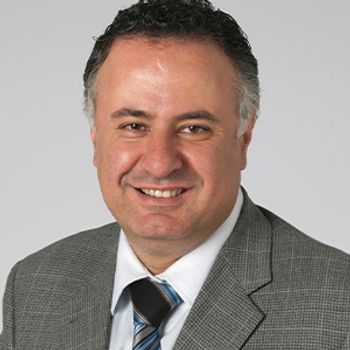
Imad Najm, MD, director of the Cleveland Clinic Epilepsy Center, detailed the ongoing efforts to transform the way health care providers diagnose and treat patients with 1 ultimate goal in mind: improving access to high-quality care.
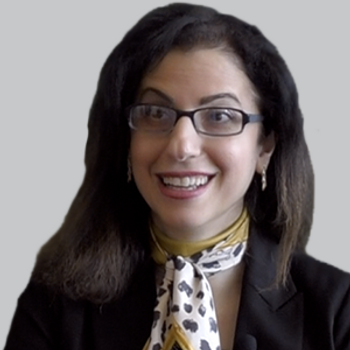
Lara Jehi, MD, professor of neurology and co-director of Network Capacity for the Clinical and Translational Science Collaborative of Cleveland Clinic, has been appointed as the inaugural chief research information officer.