

Deepa Burman, MD, FAASM, co-director of the Pediatric Sleep Evaluation Center at UPMC Children’s Hospital of Pittsburgh, discussed the potential contributors to pediatric insomnia and the role of a thorough assessment for effective management.

Isabella Ciccone, Content Associate, NeurologyLive®, has been with the team since September 2022. Follow her on X @iciccone7 or email her at [email protected]
Deepa Burman, MD, FAASM, co-director of the Pediatric Sleep Evaluation Center at UPMC Children’s Hospital of Pittsburgh, discussed the potential contributors to pediatric insomnia and the role of a thorough assessment for effective management.
The director of the DMD Program at UMass Chan Medical School shared her experience at the 2025 CureDuchenne FUTURES National Conference, held May 22-25, in San Antonio, Texas. [WATCH TIME: 5 minutes]
The director of the Center for Brain and Mind Health at Yale University discussed new findings in thrombolytic therapy, stroke monitoring, neuroprotection, and imaging technologies presented at ESOC 2025. [WATCH TIME: 7 minutes]

Funke Afolabi-Brown, MD, FAASM, chief executive officer of Restful Sleep MD, discussed the potential role of family dynamics and individualized planning in the effective management of pediatric sleep disorders.
The neurosurgeon at Northwestern Medicine discussed diagnostic approaches, evolving treatment strategies, and the importance of timely referral in managing peripheral nerve injuries. [WATCH TIME: 3 minutes]
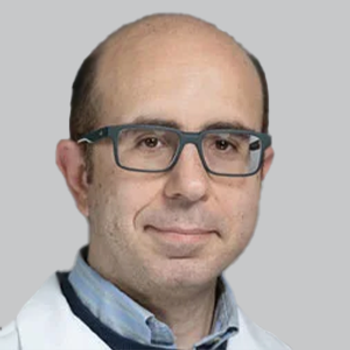
An interim analysis of an ongoing study suggested that the tonic motor activation demonstrated comparable short-term outcomes for both painful and painless forms of restless legs syndrome.
Findings from the Jazz DUET study presented at SLEEP 2025 showed that low-sodium oxybate reduced daytime sleepiness and improved sleep parameters in patients with narcolepsy types 1 and 2.
Data from a pair of phase 3 trials suggest that tirzepatide treatment may improve patient-reported measures of sleepiness in individuals with obstructive sleep apnea and obesity.

Prespecified analyses showed that obicetrapib significantly reduced primary outcome measure of Alzheimer disease biomarkers in both the overall population and APOE4 carriers.

New phase 2 trial data presented at SLEEP 2025 suggest TAK-861 significantly decreased microsleep frequency and delayed onset of first microsleep in individuals with narcolepsy type 1.
Catch up on any of the neurology news headlines you may have missed over the course of May 2025, compiled all into one place by the NeurologyLive® team.
A newly presented actigraphy-based algorithm demonstrated high accuracy in detecting daytime naps, offering insights into napping behavior changes in patients with narcolepsy type 1.

A new study presented at SLEEP 2025 reported that more than one-quarter of pregnant women experienced restless legs syndrome, with prior history of the condition emerging as a significant risk factor.
A newly presented study at SLEEP 2025 explored the practicality of various methods, such as the Apple Watch and polysomnogram, for assessing sleep in pediatric patients with Lennox-Gastaut syndrome.
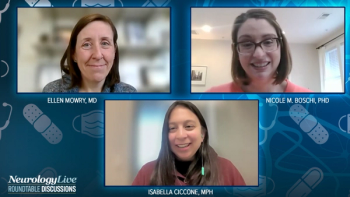
A patient and neurologist discussed personal and professional perspectives on treatment initiation, ongoing research, and patient advocacy in multiple sclerosis. [WATCH TIME: 5 minutes]
Sam Hooshmand, DO, assistant professor of neurology at the Medical College of Wisconsin, discussed the complexities of defining, diagnosing, and managing advanced MS.
A patient and neurologist discussed the importance of individualized treatment strategies and the role of shared decision-making in managing multiple sclerosis. [WATCH TIME: 5 minutes]
The associate vice president of research at the National MS Society discussed a growing research initiative focused on defining and promoting evidence-based psychosocial wellness strategies for individuals with MS. [WATCH TIME: 6 minutes]
A patient living with MS and MS clinical expert reflected on the varied and often-misdiagnosed early symptoms that can signal the onset of the autoimmune disease. [WATCH TIME: 6 minutes]
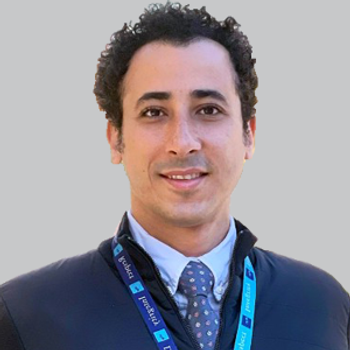
Ahmed Abdelhak, MD, assistant professor of neurology at the UCSF, discussed the evolving landscape of biomarkers in multiple sclerosis and their potential to transform remyelination approaches.

The executive director of The Sumaira Foundation discussed a newly funded international trial assessing both approved and off-label NMOSD therapies to better inform treatment decisions and patient care. [WATCH TIME: 2 minutes]
A patient living with MS and MS clinical expert reflected on the varied and often-misdiagnosed early symptoms that can signal the onset of the autoimmune disease. [WATCH TIME: 6 minutes]
The director of the John A. Schafer, MD Multiple Sclerosis Achievement Center at Dignity Health highlighted the significant impact of loneliness in individuals with multiple sclerosis. [WATCH TIME: 6 minutes]
The assistant professor of neurology at the University of California, San Francisco discussed current advancements and ongoing challenges in identifying biomarkers to accurately monitor remyelination in MS clinical trials. [WATCH TIME: 5 minutes]
The assistant professor of neurology at Mayo Clinic College of Medicine and Science outlined a case of myelin oligodendrocyte glycoprotein antibody-associated disease from diagnosis to long-term management. [WATCH TIME: 5 minutes]
The associate vice president of research at National MS Society talked about the need for evidence-based wellness strategies in multiple sclerosis, particularly focusing on psychosocial interventions.
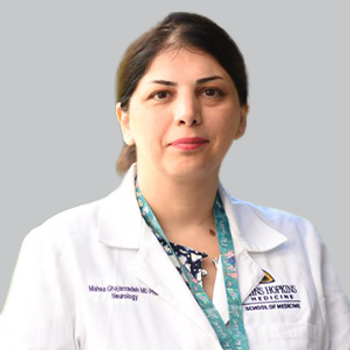
Findings from a late-breaking poster presented at CMSC 2025 suggest that CBT does not improve fatigue severity or impact in patients with multiple sclerosis.
The assistant professor in the Department of Neuroscience at Université de Montréal discussed key clinical factors influencing DMT selection in patients newly diagnosed with multiple sclerosis. [WATCH TIME: 5 minutes]
The professor of pediatrics in neurology at the University of Toronto discussed differences in disease course, treatment strategy, and trial challenges of MOG-associated disorders in pediatric versus adult patients. [WATCH TIME: 5 minutes]
The assistant professor of neurology at Barrow Neurological Institute talked about the lack of public awareness for hypertension among individuals with MS despite many meeting diagnostic criteria. [WATCH TIME: 6 minutes]