
Commentary|Videos|June 3, 2026
What Clinicians Need to Know About Emerging Stem Cell Therapies for Parkinson Disease
From patient questions to clinical trial referrals, this episode highlights practical strategies for counseling individuals interested in stem cell-based therapies for Parkinson disease.
Advertisement
Episodes in this series
As interest in regenerative medicine continues to grow, neurologists are increasingly being asked to discuss stem cell therapies with patients living with Parkinson disease. At the same time, the rapid pace of research, expanding clinical trial activity, and growing public awareness have created a need for clear, evidence-based educational resources that help clinicians distinguish established science from emerging and experimental approaches.
To help address that need, the International Society for Stem Cell Research (ISSCR), in collaboration with Harvard Medical School, recently launched an educational course focused on stem cell medicine in Parkinson disease. Designed for clinicians and healthcare professionals, the program provides an overview of stem cell science, ongoing therapeutic development, clinical trial activity, and practical considerations for discussing these therapies with patients and families.
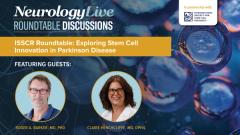
In this episode of NeurologyLive's Roundtable Discussion series, Roger Barker, MD, PhD, professor of clinical neuroscience at the University of Cambridge, and Claire Henchcliffe, MD, DPhil, professor of neurology at the University of California, Irvine, discuss what clinicians can gain from the course and why education in this area has become increasingly important. The conversation explores common patient questions, the challenge of distinguishing promising research from unproven interventions, and how physicians can use trusted resources to guide conversations about stem cell therapies in Parkinson disease.
Transcript edited for clarity.
Claire Henchcliffe, MD, DPhil: Perhaps I can kick off our conversation about the clinical community.
I was in clinic yesterday, and I think pretty well everyone who came to see me for Parkinson disease had questions. Sometimes they ask more broadly, "What's new? What are you watching? You just went to a neurology meeting. Was there anything we should know about?" Some people are actually coming in specifically with questions about stem cells. They ask, "What's going on? I'm hearing about stem cells. Tell me what's happening."
Because of the recent approval in Japan for the Sumitomo product, I'm getting questions like, "Should I book my airline tickets?" These are really reasonable questions. It boils down to whether this is something they need to jump on now. Am I going to be harming my future health if I don't get proactive and pursue this?
The questions are great, but the answers are really complex and nuanced. What we've tried to provide in this course is both basic and more advanced information so clinicians can think through these issues and decide how they feel comfortable counseling their patients. Are they ready to refer people to these very advanced clinical trials? Every patient is different.
It really behooves us to get this knowledge and expertise out into the community so physicians can help their patients and counsel them responsibly and with confidence.
Roger Barker, MD, PhD: I think you make a lot of good points.
One of the problems is that you have to distinguish between things that are unproven. These are therapies offered by clinics where patients are paying for treatment, but the rationale is not always obvious and the scientific basis can be questionable. That falls into the category of stem cell tourism.
Then there are therapies such as those being developed in Japan, which have been studied by excellent researchers and evaluated in early trials. However, they're still experimental, and we're still trying to understand them. Ultimately, what we would like is a therapy that has successfully completed the full clinical trial process and has been licensed by the relevant regulatory agencies.
Helping people distinguish between these different categories of therapies and understand the level of evidence supporting each one is important.
The other issue is that many patients feel they have two problems. In the UK, for example, some patients assume they cannot access a treatment because the NHS cannot afford it, rather than because the therapy has not yet been proven. It's important to distinguish between treatments that are unavailable because they remain unproven and treatments that may be limited because of cost.
There is always a very real perception that people are missing out. As Claire Henchcliffe, MD, DPhil, mentioned, patients often say, "I just read about this trial. Why can't I have this therapy? Why can't I be in that trial? Surely everyone should be doing this."
You have to explain that while the research is exciting, it remains a developing field.
Providing physicians with a resource where they can obtain an up-to-date view of the field is extremely helpful. It allows them to tell their patients, "This is the current state of the science. It will change, but this is where we are right now, and these are the things I would recommend."
One of the strengths of the ISSCR is that it has an excellent website with a great deal of information. While we're talking primarily about physicians, patients themselves can also benefit from these resources. Clinicians can direct patients to reputable sources rather than having them rely solely on information from social media feeds or company materials, which may not always be the most accurate or well-researched.
Claire Henchcliffe, MD, DPhil: That's a great point.
I think one of the things we can do with this course is provide information, although it's not intended to be a week-long or month-long educational program. What it does provide are important pointers to additional resources and places where clinicians can direct their patients for more information.
That's one of the things I really appreciate about the ISSCR. The organization is very unbiased, and the information is provided through reputable, trusted sources.
Advertisement
Related Content
Advertisement
Latest CME







Advertisement
Advertisement
Trending on NeurologyLive - Clinical Neurology News and Neurology Expert Insights
1
Differentiating Pathologic Features of Alzheimer Disease and Lewy Body Dementia: Charbel Moussa, MBBS, PhD
2
Improving Recognition and Treatment of Hyperkinetic Movement Disorders: Zoltan Mari, MD
3
Donanemab Shows Durable Amyloid Clearance and Consistent Safety in Early-Start Patients
4
Current and Emerging Strategies for Managing Huntington Disease Symptoms: Karen Anderson, MD
5