

Emer MacSweeney, MD, a consultant neuroradiologist and trial investigator of the phase 3 APOLLOE4 study, provided a clinical view of the latest study findings, and the difficulties with finding treatments for APOEε4/4 carriers of Alzheimer disease.

Marco Meglio, Assistant Managing Editor for NeurologyLive, has been with the team since October 2019. Follow him on Twitter @marcomeglio1 or email him at [email protected]
Emer MacSweeney, MD, a consultant neuroradiologist and trial investigator of the phase 3 APOLLOE4 study, provided a clinical view of the latest study findings, and the difficulties with finding treatments for APOEε4/4 carriers of Alzheimer disease.

The prefilled syringe is approved for a 20- to 30-second subcutaneous injection, and patients can self-inject following proper instruction in the subcutaneous injection technique.

Cassandra Gorsuch, PhD, chief scientific officer at Precision Biosciences, discussed the company’s ARCUS gene editing platform, its innovative approach to treating Duchenne muscular dystrophy, and promising preclinical data presented at MDA 2025.
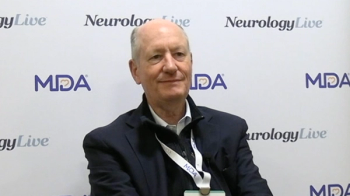
The professor of neurology at the University of Texas Health Science Center San Antonio discussed some of the challenges with therapeutic development for OPMD, as well as advances and barriers to gene therapy approaches. [WATCH TIME: 4 minutes]

Relative to previously approved therapies like rimegepant, ubrogepant, and zavegepant, AXS-07 resulted in better 2-hour pain relief, sustained pain relief, and reduced use of rescue medications.

Harmony Biosciences’ phase 3 study will assess EPX-100, a repurposed antihistamine, as a potential treatment for Lennox-Gastaut syndrome, targeting seizure reduction and improved outcomes.

Murali Doraiswamy, MD, MBBS, a professor of psychiatry and geriatrics at Duke University School of Medicine, gave clinical follow-up on a pivotal analysis of the phase 3 APOLLOE4 study testing a novel therapeutic for Alzheimer disease.

Denali Therapeutics has begun submitting a BLA for tividenofusp alfa as a potential Hunter syndrome treatment, supported by promising biomarker reductions in clinical trials.

Teva’s migraine therapy fremanezumab (Ajovy) may soon expand its reach to pediatric patients, as the FDA reviews a supplemental application for its use in children and adolescents aged 6 to 17.

The ENABLE phase 4 study will evaluate the real-world safety, efficacy, and patient experience of ublituximab in relapsing multiple sclerosis over a 96-week period.

Presented at the 2025 AAN Annual Meeting, findings from a phase 3 study showed that a single 30 mg/kg dose of ANX005 significantly improved health outcomes in Guillain-Barré syndrome, with benefits seen as early as week 1 and sustained over 6 months.

Long-term data from a phase 2 study extension suggest that frexalimab, a CD40L inhibitor, maintains disease control and is well-tolerated in relapsing multiple sclerosis, reinforcing its potential as a next-generation treatment.

Inge Verberk, PhD, a research associate at the Amsterdam University Medical Center, sat down at AD/PD 2025 to discuss changes in Alzheimer trials, the emergence of plasma biomarkers, and deciphering which biomarkers are of utmost importance.

Data suggests that immune dysfunction biomarkers do not pose a major barrier to patient enrollment in Alzheimer’s research, as most patients meeting general AD criteria also qualified under immune dysfunction criteria.

Mind Moments®, a podcast from NeurologyLive®, brings you an exclusive interview with Daniel Harrison, MD. [LISTEN TIME: 20 minutes]

The Spectris device demonstrated preserved corpus callosum structure and correlated sensory-evoked gamma oscillations in patients with Alzheimer disease, highlighting its potential neuroprotective effects.

Mark Roskey, PhD, chief scientific officer at Quanterix, provided clinical insight on the function of the company’s Simoa technology and the incorporation of various biomarkers to aid in the diagnosis of Alzheimer disease.

The vice president of research at Cognition Therapeutics gave clinical insight on several new analyses covering CT1812, an orally delivered small molecule oligomer antagonist, in patients with early-stage Alzheimer disease. [WATCH TIME: 5 minutes]

Presented at the 2025 AD/PD Conference, the study incorporates patient engagement in its design and implementation, focusing on optimizing study accessibility, reducing burden, and evaluating glovadalen’s potential as an adjunctive treatment for PD.

Investigators at AD/PD 2025 presented new data showing that changes in plasma p-tau217 and p-tau181 closely correlate with clinical outcomes in anti-amyloid therapy trials for Alzheimer disease.

The professor of neurology at Brigham and Women’s Hospital gave clinical insights on the therapeutic potential of targeting compliment as a way to mitigate risk for amyloid-related imaging abnormalities from antiamyloid therapies.

Although valiltramiprosate failed to distinguish itself from placebo on the primary end point, the drug performed significantly better among mild MCI participants vs those with mild Alzheimer disease.

Research suggests that CSF ATI ratios could serve as a biomarker for identifying patients with Alzheimer disease at higher risk of ARIA during lecanemab treatment, aiding in safer patient management.

Eli Lilly’s expanded LillyDirect platform tackles barriers in Alzheimer disease diagnosis and care, offering telehealth and in-person options through Healthgrades and Synapticure, with a focus on timely access and patient support.
The professor of neurology at the University of Texas Health Science Center San Antonio provided clinical insights on the genetic basis of oculopharyngeal muscular dystrophy, as well as the primary challenges in diagnosing and treating the condition. [WATCH TIME: 5 minutes]
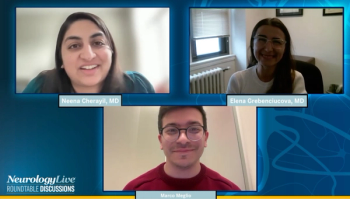
In this final episode, neurologists discuss the role of advanced imaging, like OCT, in diagnosing and managing MS, emphasizing the need for further research to optimize its clinical application. [WATCH TIME: 2 minutes]
A pair of neurologists provide clinical insight on the difficulties with identifying and differentiating optic neuritis in various autoimmune conditions like multiple sclerosis and neuromyelitis optica spectrum disorder. [WATCH TIME: 4 minutes]
Test your neurology knowledge with NeurologyLive®'s weekly quiz series, featuring questions on a variety of clinical and historical neurology topics. This week's topic is on CGRP medications to treat migraine.
In this third episode, experts delve into the evolving role of optic neuritis and the central vein sign in refining multiple sclerosis diagnosis, highlighting their significance in distinguishing MS from other conditions and ensuring accurate patient care. [WATCH TIME: 3 minutes]
Panelists explore the impact of including optic nerve involvement in the diagnostic criteria for multiple sclerosis, highlighting how this revision leads to more definitive diagnoses and earlier initiation of treatment for patients at high risk. [WATCH TIME: 2 minutes]