




Movement Disorders
Latest News
Advertisement
Latest Videos
CME Content



Advertisement
More News

Nuri Jacoby, MD, a neurologist at Maimonides Medical Center and SUNY Downstate, previewed his talk at the 2025 AUPN Annual Meeting on using simulation to evaluate nonclinical competencies like communication and professionalism. [WATCH TIME: 3 minutes]
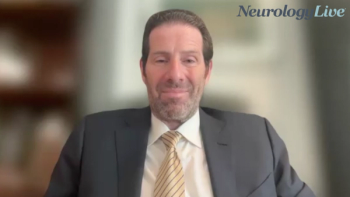
The professor of neurological surgery at Weill Cornell Medicine shared his reaction to the recent approval of the Exablate Neuro platform that uses MRI-guided focused ultrasound to treat Parkinson disease. [WATCH TIME: 5 minutes]
A groundbreaking trial reveals that subthalamic deep brain stimulation effectively treats isolated dystonia, showing significant long-term motor and mental health improvements.
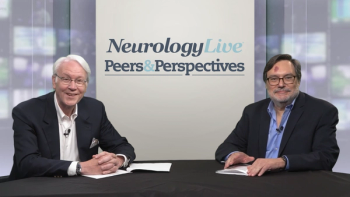
Panelists discuss how newer Parkinson disease therapies may impact dyskinesia management by potentially providing continuous dopaminergic stimulation that could prevent dyskinesia development if used early, though current evidence from phase 3 trials shows mixed results with improvements in good ON time (ON time without troublesome dyskinesia) but limited reduction in existing troublesome dyskinesia, suggesting that while these treatments offer promise, more research is needed to determine their effectiveness in reducing dyskinesia in patients who already experience it.
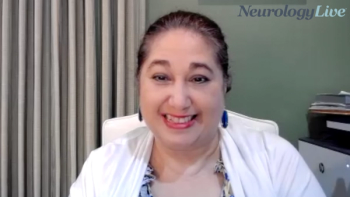
The movement disorder specialist and patient living with Parkinson disease highlighted the need for a more human-centered approach in managing chronic and progressive movement disorders. [WATCH TIME: 6 minutes]

Here's some of what is coming soon to NeurologyLive® this week.
Take 5 minutes to catch up on NeurologyLive®'s highlights from the week ending July 11, 2025.
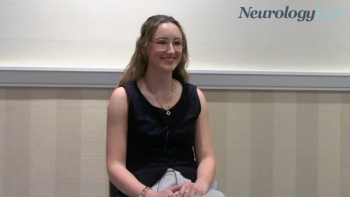
The neuropsychiatry researcher at King's College London highlighted significant gender differences in anxiety, depression, quality of life, and social support among patients with PD undergoing deep brain stimulation. [WATCH TIME: 5 minutes]
A recent study confirmed ambroxol's safety in Parkinson disease dementia, showing stabilization of neuropsychiatric symptoms but no cognitive improvement.
The assistant professor of medicine at Stanford University highlighted how gastrointestinal dysfunction in Parkinson disease can affect levodopa bioavailability and symptom management. [WATCH TIME: 7 minutes]

Exablate Neuro is a noninvasive, MRI-guided focused ultrasound technology designed to treat targeted brain areas without incisions or implanted hardware, offering a lower-risk alternative to traditional surgery.
The director of movement disorders at the Banner Sun Health Research Institute discussed distinguishing atypical Parkinsonian disorders early and planning care around their complex symptomatology. [WATCH TIME: 4 minutes]
Here's some of what is coming soon to NeurologyLive® this week.

Laren Becker, MD, PhD, a physician-scientist at Stanford University, discussed how gastrointestinal dysfunction and peripheral dopaminergic activity impact Parkinson disease treatment and progression.

Continuous subcutaneous apomorphine infusion significantly reduces OFF episodes and enhances ON time in Parkinson's disease patients, improving overall health status.
The nurse practitioner in the Center for Movement Disorders & Neurorestoration at the University of Florida discussed a complex case of childhood-onset dystonia treated with DBS. [WATCH TIME: 6 minutes]

Research reveals that delayed-release amantadine significantly reduces Parkinson disease symptoms and medication use, offering patients improved quality of life.
A physician assistant specializing in Parkinson disease shared key clinical considerations for selecting and educating patients about on-demand therapies for the movement disorder.
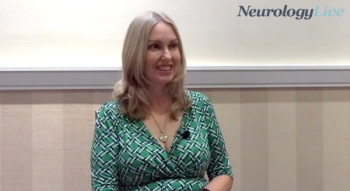
At ATMRD 2025, a patient advocate living with PD and advisory board member of the Parkinson's Foundation outlined key nonpharmacologic tools that have supported her care journey. [WATCH TIME: 5 minutes]

Overviewing the major clinical trial readouts in neurology from the first half of 2025, with data that could reshape patient care.
Here's some of what is coming soon to NeurologyLive® this week.
Test your neurology knowledge with NeurologyLive®'s weekly quiz series, featuring questions on a variety of clinical and historical neurology topics. This week's topic is on the ATMRD Congress.

A recent analysis reveals significant links between sleep, quality of life, and daily activities in patients with Parkinson disease, highlighting benefits of Vyalev treatment.
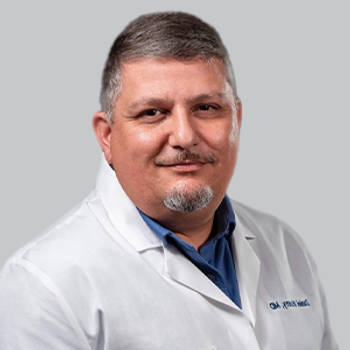
Daniel Irizarry, MD, a former physician and patient living with PD, discussed how hands-on simulation training could enhance clinician empathy and improve treatment strategies.

Continuous subcutaneous apomorphine infusion enhances confidence and reduces treatment burden for Parkinson's patients, improving daily activity engagement.
Advertisement
Advertisement
Trending on NeurologyLive - Clinical Neurology News and Neurology Expert Insights
1
Cladribine Tablets Show Ability to Improve or Stabilize Cognitive Function in Patients With Relapsing Multiple Sclerosis
2
Myelin Protective Small Molecule Lucid-MS Shows Promising Early-Stage Data in Healthy Volunteers
3
Using Human iPSC Models to Dissect PIRA Mechanisms in Progressive Multiple Sclerosis: Valentina Fossati, PhD
4
Phase 3b RESHAPE Study Evaluates Risk–Benefit of Switching From Ocrelizumab to BTK Inhibitor Remibrutinib
5