


MS and Demyelinating Disorders
Latest News
Advertisement
Latest Videos



CME Content



Advertisement
More News

Kathleen Costello discusses her new role as interim CEO of the CMSC. She has the support of Jeff Wilken, CMSC president, and Tina Trott, CMSC director.
The interim chief executive officer at the Consortium of Multiple Sclerosis Centers invites healthcare professionals to the Consortium’s annual meeting from May 28–31 in Phoenix, Arizona. [WATCH TIME: 2 minutes]
The associate researcher at the University of California, San Francisco discussed a refined EAE model that could better replicate MS pathology, enabling deeper insights into demyelination, neuronal loss, and remyelination. [WATCH TIME: 6 minutes]
The professor of neurology and neurosurgery at McGill University discussed the evolving understanding of neuroimmune interactions in MS, highlighting how these interactions contribute to disease progression and potential repair mechanisms. [WATCH TIME: 4 minutes]
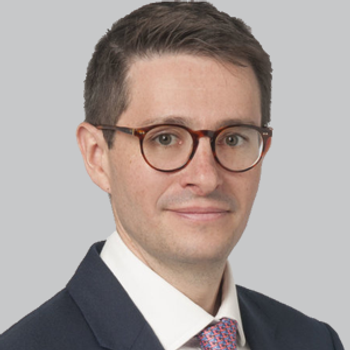
Daniel Ontaneda, MD, PhD, an associate professor of neurology at the Cleveland Clinic Lerner College of Medicine, gave thoughts and perspectives on some of the emerging, promising advances in multiple sclerosis care expected to come to fruition in 2025.
The assistant professor in the department of neurology at Mount Sinai talked about a recent study that highlighted how socioeconomic status and diet could significantly impact physical and cognitive outcomes in patients with MS. [WATCH TIME: 2 minutes]
The professor of neurology at University of Colorado School of Medicine discussed the evolving landscape of MS treatment, highlighting the role of personalized medicine and biomarker-driven decision-making. [WATCH TIME: 5 minutes]

Treatment strategies varied across cases, incorporating therapies like prednisolone, rituximab, and azathioprine, with overall positive outcomes and symptom improvement.

Here's some of what is coming soon to NeurologyLive® this week.
Catch up on any of the neurology news headlines you may have missed over the course of February 2025, compiled all into one place by the NeurologyLive® team.
The instructor in the department of radiology at Weill Cornell Medicine discussed how structural and functional brain connectomes can potentially improve predictions of MS progression and treatment response. [WATCH TIME: 4 minutes]

A post-hoc analysis of patients from the CHAMPION-NMOSD trial revealed that the majority received their initial meningococcal vaccination within 6-months of their last rituximab dose.
The professor of neurosurgery and physiology at University of Colorado School of Medicine talked about how vagus nerve stimulation may promote remyelination and functional recovery in multiple sclerosis. [WATCH TIME: 4 minutes]

A late-breaking study presented at the 2025 ACTRIMS Forum reported that a modified Atkins diet reduced inflammation and altered immune cell metabolism in multiple sclerosis.
At the 2025 ACTRIMS Forum, the director of the MS Comprehensive Care Center at Stony Brook Medicine discussed the evolution of high-efficacy treatments for MS. [WATCH TIME: 4 minutes]
Data from more than 16,000 trial participants point to possible challenges with assessing and safely administering novel therapeutics among those with comorbidities—which may be present in as much as half of the patient population.
In the CAVS-MS study, 19% of participants with atypical or radiological-only presentations met the 2024 McDonald Criteria for MS, enabling earlier treatment initiation.

GFAP changes positively correlated with gadolinium-enhancing lesion volume (P = 0.18) and negatively with left ventricular volume (P = -0.19).
The vice president and senior global program lead for Hematology and Cell Therapy at BMS gave clinical commentary on encouraging phase 1 findings of CD19-XT in progressive and relapsing multiple sclerosis.

In both HERCULES and GEMINI trials, tolebrutinib reduced the risk of 6-month confirmed disability worsening, especially in participants with at least 4 baseline paramagnetic rim lesions.

Glatiramer acetate depot treatment showed stability in EDSS scores over 3 years, suggesting halted progression in patients with primary progressive MS.

After 24 months after switching to cladribine, 100% of patients with relapsing MS remained free from T1 gadolinium-enhancing lesions, with no reported cases of PML or rebound disease activity.
Here's some of what is coming soon to NeurologyLive® this week.

The 80 mg QD dosage, which showed the greatest efficacy in lesion reduction (92.3% at 24 weeks), will be used in phase 3 progressive MS studies.

A new phase 1 study will investigate the safety and biological effects of light therapy as a potential approach to alleviating fatigue in patients with progressive multiple sclerosis.
Advertisement
Advertisement
Trending on NeurologyLive - Clinical Neurology News and Neurology Expert Insights
1
Myelin Protective Small Molecule Lucid-MS Shows Promising Early-Stage Data in Healthy Volunteers
2
Cladribine Tablets Show Ability to Improve or Stabilize Cognitive Function in Patients With Relapsing Multiple Sclerosis
3
Cladribine Maintains Efficacy, Safety Profile in Older Patients With Multiple Sclerosis
4
Using Human iPSC Models to Dissect PIRA Mechanisms in Progressive Multiple Sclerosis: Valentina Fossati, PhD
5