



MS and Demyelinating Disorders
Latest News
Advertisement
Latest Videos


CME Content






Advertisement
More News
Take 5 minutes to catch up on NeurologyLive®'s highlights from the week ending June 28, 2024.

In this segment, Negroski comments on the realism behind wearing off effect of treatments, specifically ocrelizumab, and how clinicians may work around some of these issues.
Negroski discussed some of the takeaways from an analysis of patients with stable MS who chose to switch from natalizumab to other, more moderate-efficacy oral disease-modifying therapies.

Here's some of what is coming soon to NeurologyLive® this week.
Test your neurology knowledge with NeurologyLive®'s weekly quiz series, featuring questions on a variety of clinical and historical neurology topics. This week's topic is on Alzheimer disease/dementia.

Patients treated with at least 12.5 mg/day of oral prednisone for at least 3 months had an 88% reduction in the risk of relapse compared with those who did not receive this regimen.
Take 5 minutes to catch up on NeurologyLive®'s highlights from the week ending June 21, 2024.
In this conversation, Negroski provides commentary on the role of lymphocyte counts and specifically a study evaluating changes in these counts for patients switching between dimethyl and diroximel fumarates.
Donald Negroski, MD, shared thoughts on retrospective data assessing patients with multiple sclerosis who switched from S1P-modulating agents to ozanimod, another approved disease-modifying therapy.

The clinical research director of the UCSF Multiple Sclerosis Center discussed findings from the end-of-study analysis assessing inebilizumab which revealed a significant reduction in attack rates among patients with NMOSD over time. [WATCH TIME: 3 minutes]
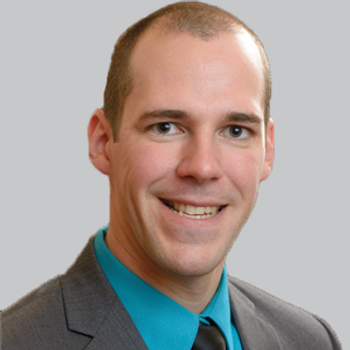
Douglas A. Wadja, PhD, an assistant professor of neurology at Cleveland State University, detailed a study assessing an electrical nerve stimulation approach to alleviate gait dysfunction in patients with MS.
Here's some of what is coming soon to NeurologyLive® this week.
The assistant professor of neurology at UCSF Weill Institute for Neurosciences talked about a study that explored the use of commercial wearable devices to monitor and manage bladder dysfunction in multiple sclerosis. [WATCH TIME: 6 minutes]
Test your neurology knowledge with NeurologyLive®'s weekly quiz series, featuring questions on a variety of clinical and historical neurology topics. This week's topic is on narcolepsy.
Take 5 minutes to catch up on NeurologyLive®'s highlights from the week ending June 14, 2024.

Mind Moments®, a podcast from NeurologyLive®, brings you exclusive interviews with Anthony Feinstein, PhD, FRCPC, MBBCh; Brian G. Weinshenker, MD; Douglas A. Wajda, PhD; Le Hua, MD; and Eoin P. Flanagan, MB, BCh. [LISTEN TIME: 22 minutes]
The assistant professor of neurology at Cleveland State University provided perspective on an early-stage study assessing the impacts of a functional electrical stimulation approach to treat gait problems in multiple sclerosis. [WATCH TIME: 4 minutes]

The director of Mission Delivery and Program Development for the Multiple Sclerosis Association of America provided perspective on a study presented at CMSC 2024 highlighting factors that play a role in access to resources and healthcare for patients with MS. [WATCH TIME: 3 minutes]
NeuroVoices: William L. Conte, MD, MS, on Improving Care for LGBTQ+ Patients With Multiple Sclerosis
The head of the MS Center at Methodist Hospitals discussed the need for inclusive and affirming healthcare practices for patients with multiple sclerosis who identify as LGBTQ+.
The clinical research director of the UCSF Multiple Sclerosis Center provided an overview of the phase 2/3 N-Momentum study assessing the efficacy of inebilizumab in patients with neuromyelitis optica spectrum disorder. [WATCH TIME: 5 minutes]
The professor of neurology at Stony Brook Medicine talked about the diagnosis of primary progressive multiple sclerosis, a unique MS phenotype characterized by a gradual deterioration without initial attack. [WATCH TIME: 5 minutes]
Catch up on any of the neurology news headlines you may have missed over the course of May 2024, compiled all into one place by the NeurologyLive® team.
The assistant professor at Hunter College emphasized the important role of localization and accurately identifying the origin of neurological symptoms when diagnosing and managing multiple sclerosis. [WATCH TIME: 7 minutes]
Here's some of what is coming soon to NeurologyLive® this week.
Test your neurology knowledge with NeurologyLive®'s weekly quiz series, featuring questions on a variety of clinical and historical neurology topics. This week's topic is on stroke and large hemispheric infarction.
Advertisement
Advertisement
Trending on NeurologyLive - Clinical Neurology News and Neurology Expert Insights
1
Cladribine Tablets Show Ability to Improve or Stabilize Cognitive Function in Patients With Relapsing Multiple Sclerosis
2
Myelin Protective Small Molecule Lucid-MS Shows Promising Early-Stage Data in Healthy Volunteers
3
Cladribine Maintains Efficacy, Safety Profile in Older Patients With Multiple Sclerosis
4
Using Human iPSC Models to Dissect PIRA Mechanisms in Progressive Multiple Sclerosis: Valentina Fossati, PhD
5