


MS and Demyelinating Disorders
Latest News
Advertisement
Latest Videos

CME Content


Advertisement
More News
An exergaming program that spanned 8 weeks showed positive effects for patients with multiple sclerosis both with and without restless legs syndrome.
Take a look at 5 of the most-anticipated clinical trial data readouts expected in 2023 that neurology health care professionals should keep their eyes on.

The psychologist and professor in the department of rehabilitation medicine at the University of Washington shared her perspective on the state of mental health care in multiple sclerosis. [WATCH TIME: 4 minutes]

A cross-sectional and longitudinal comparative analysis suggests a subclinical neurodegenerative process may occur in MOG antibody disease based on a distinct pattern of brain atrophy.

Results from the CIRCLES cohort demonstrated a significant association in relapse patterns and disease phenotype for patients with NMOSD who change treatment.

Over a 2-year treatment period, no clear effects of dimethyl fumarate were identified on clinical or MRI outcomes in patients with progressive multiple sclerosis.

Here's some of what is coming soon to NeurologyLive® this week.
Test your neurology knowledge with NeurologyLive®'s weekly quiz series, featuring questions on a variety of clinical and historical neurology topics. This week's topic is neuromyelitis optica spectrum disorder, or NMOSD.
Take 5 minutes to catch up on NeurologyLive®'s highlights from the week ending January 27, 2023.
The psychologist and professor in the department of rehabilitation medicine at the University of Washington talked about the benefits of a new initiative from the National MS Society focusing on mental health. [WATCH TIME: 4 minutes]
The director of Neuroinnovation and Multiple Sclerosis & Neuroimmunology Imaging Program at UT Southwestern Medical Center discussed ways to build off the ARISE study and the unanswered questions regarding radiologically isolated syndrome. [WATCH TIME: 3 minutes]

The new criteria, inclusive of both pediatric and adult patients, advocates for testing for MOG-IgG in appropriate populations, and cautions against testing patients with clinical and radiological features typical of multiple sclerosis.
Data showed that slightly more than half of the patients with NMOSD visited at least 2 neurologists before receiving full diagnosis, and less than 30% reported they were aware of at least 1 nearby specialized NMOSD center.

In the combined double-blind and open-label extension periods, plasma neurofilament light levels were lower in those on teriflunomide and were prognostic of relapse or MRI activity.

The director of Neuroinnovation and Multiple Sclerosis & Neuroimmunology Imaging Program at UT Southwestern Medical Center provided insight on the promising future of treating radiologically isolated syndrome at its earliest stages.
According to a medical records analysis, patients with late onset NMOSD experience transverse myelitis more frequently at disease onset in comparison with early onset NMOSD.

Michelle Chen, PhD, a neuropsychologist at Rutgers University, talked about the motivations behind her most recent published study on incorporating keystroke dynamics in MS cognition.
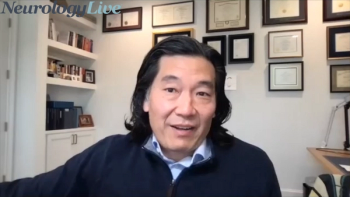
The director of Neuroinnovation and Multiple Sclerosis & Neuroimmunology Imaging Program at UT Southwestern Medical Center discussed the presentation of radiologically isolated syndrome and identifying candidates for treatment. [WATCH TIME: 4 minutes]

Parents who had a child with multiple sclerosis and had either low socioeconomic position or family health condition were at particularly high risk for low health-related quality of life.
Here's some of what is coming soon to NeurologyLive® this week.
Take 5 minutes to catch up on NeurologyLive®'s highlights from the week ending January 20, 2023.
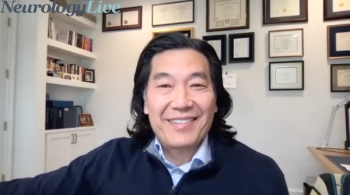
The director of Neuroinnovation and Multiple Sclerosis & Neuroimmunology Imaging Program at UT Southwestern Medical Center discussed ARISE, the first-ever study to show disease-modifying effect in radiologically isolated syndrome. [WATCH TIME: 3 minutes]
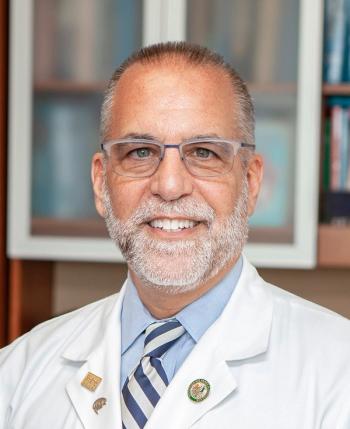
Sacco, who also served as president of the American Heart Association/ American Stroke Association, succumbed to a brain tumor on January 17, 2023.
Featuring a cohort of more than 500 patients with NMOSD, data showed that those with comorbidities exhibit multiple presentations and are more likely to relapse after immunotherapy.
Results from on ongoing phase 1 trial showed a favorable safety profile with CT103A in patients with NMOSD.
Advertisement
Advertisement
Trending on NeurologyLive - Clinical Neurology News and Neurology Expert Insights
1
Cladribine Tablets Show Ability to Improve or Stabilize Cognitive Function in Patients With Relapsing Multiple Sclerosis
2
Myelin Protective Small Molecule Lucid-MS Shows Promising Early-Stage Data in Healthy Volunteers
3
Using Human iPSC Models to Dissect PIRA Mechanisms in Progressive Multiple Sclerosis: Valentina Fossati, PhD
4
Phase 3b RESHAPE Study Evaluates Risk–Benefit of Switching From Ocrelizumab to BTK Inhibitor Remibrutinib
5