

In total, 33% of the study participants died within 180 days after initiating their first opioid prescription, compared with 6.4% of those unexposed.
In total, 33% of the study participants died within 180 days after initiating their first opioid prescription, compared with 6.4% of those unexposed.

Chaoran Ma, MD, PhD, assistant professor at University of Massachusetts Amherst, talked about the association between bowel movement frequency, the gut microbiome, and cognitive function in patients living with dementia.
The neurologist in the Danish Dementia Research Center at Rigshospitalet in Copenhagen, Denmark, discussed a cohort study that examined the association between opioid use and the risk of mortality in an older patient population living with dementia. [WATCH TIME: 5 minutes]

Change in phosphorylated tau231, the primary outcome, favored nicotinamide despite not reaching statistical significance.
With the recent approval of lecanemab (Leqembi; Eisai), NeurologyLive took a closer look at the Alzheimer pipeline, and the potential agents clinicians should keep an eye on in the coming years.

Using a cohort of more than 600 cognitively normal adults, the MIND diet failed to outperform a control diet of mild caloric restriction on several outcomes, including cognition and hippocampal volumes.
The professor in the department of internal medicine at RUSH Medical College talked about estimating the prevalence of Alzheimer disease to uncover the variability in disease prevalence at a micro-level and its implications for public health programs. [WATCH TIME: 5 minutes]

The associate professor of neurology at the Indiana University School of Medicine provided commentary on a study comparing traditional cognitive screening methods and the Linus Health Digital Clock and Recall test.
In a cohort of nearly 800 frail adults and elderly patients with neuropsychiatric symptoms, pimavanserin showed similar rates of treatment-related adverse events and discontinuations because of TEAEs to placebo.

The clinical relevance of donanemab was demonstrated through a slowing of clinical decline, stability of clinical symptoms, lowered risk of advancement to next clinical stage, and lower risk of meaningful within-patient change.

The associate professor of neurology at the Indiana University School of Medicine provided insight on the distinguishable characteristics of certain cognitive screening tools and the advantages to each. [WATCH TIME: 3 minutes]

The director of research for internal medicine and geriatrics at Indiana University School of Medicine provided perspective on navigating challenges with newly approved treatments for Alzheimer disease, and using resources efficiently. [WATCH TIME: 5 minutes]

A comparison between impaired scores on Digital Clock and Recall and impaired scores on Montreal Cognitive Assessment produced a 76% concordance.

According to diary data, caregiver's perceived reciprocity showed a substantial direct influence on the occurrence of behavioral symptoms on both the current day and the subsequent day for patients with Alzheimer disease and related dementias.

The postdoctoral fellow at the University of California San Diego discussed using CRISPR-based gene editing to alter the amyloid precursor protein gene in mice models with symptoms of Alzheimer disease. [WATCH TIME: 5 minutes]
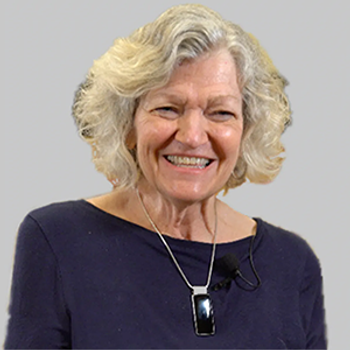
Clinicians must be armed with fact-based information on all treatment options especially newer medications and technologies—good clinical care must be both patient-centric and knowledge-driven.
The National Multiple Sclerosis Society sponsored research fellow at Kessler Foundation talked about a research project that investigates the differences in brain structure and aging metrics among patients with multiple sclerosis from differing racial and ethnic backgrounds. [WATCH TIME: 5 minutes]
The director of the Neuroinformatics Program at the University of California, Irvine, discussed complexities with different machine learning algorithms in migraine research, including findings from the AMPP study. [WATCH TIME: 5 minutes]

The highest proportions of patients with severe ocular impairment at baseline showed greater improvements in symptom severity on ravulizumab in comparison with placebo after 26 weeks.

Nearly half of patients treated with zilucoplan were considered responders on Myasthenia Gravis Activities of Daily Living (MG-ADL) at the first week, suggesting a rapid onset of efficacy.
The social worker in the Pediatric Multiple Sclerosis Clinic at Children's Hospital of Philadelphia talked about depression and suicidality rates in pediatric patients with multiple sclerosis. [WATCH TIME: 5 minutes]
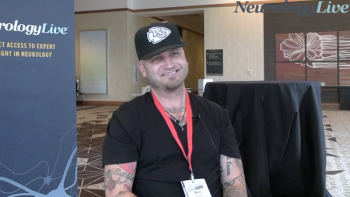
The professor of anesthesiology at Washington University in St. Louis discussed the reasons behind his presentation at the 2023 AHS Annual Meeting on engaging underserved populations in pain medicine research. [WATCH TIME: 3 minutes]
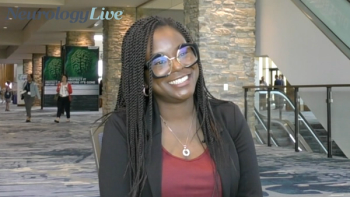
The assistant professor at Queen’s University discussed results from a pilot trial that evaluated the impact of a dyadic physical activity intervention among both caregivers and patients with multiple sclerosis. [WATCH TIME: 5 minutes]
At month 2 of a 3-month treatment period, investigators observed an improvement of 2.75 days favoring tricaprilin.

Patients with generalized myasthenia gravis treated with efgartigimod consistently exceeded treatment compared with placebo regardless of gender in age, disease duration, BMI, and thymectomy.
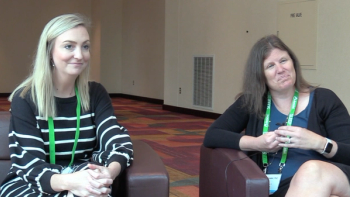
The duo from Indiana University School of Medicine discussed the ongoing research initiatives to better understand sleep disorders among pediatrics, and ways to improve approaches like cognitive behavioral therapy. [WATCH TIME: 4 minutes]
The postdoctoral researcher in the department of neurology at John Hopkins School of Medicine talked about indole-3-lactate as a signaling molecule in the gut-brain axis and its potential as a treatment for MS. [WATCH TIME: 5 minutes]
The undergraduate program director at the University of South Carolina discussed outdated teaching methods used in neurology, and the need to provide different hands-on approaches to students. [WATCH TIME: 5 minutes]
The director of the Buffalo Neuroimaging Analysis Center talked about the ENLIGHTEN trial, where results showed a correlation between cognitive impairment and brain volume with ozanimod. [WATCH TIME: 5 minutes]

In a cohort of patients who experienced 4-14 migraine days/month, treatment with atogepant continued to improve patients’ migraine status regardless of prior medication failures.