
The pediatric neurologist and sleep medicine specialist at Geisinger Medical Center provided commentary on the current unmet needs for patients with narcolepsy, including improvements in treatment options. [WATCH TIME: 3 minutes]
The pediatric neurologist and sleep medicine specialist at Geisinger Medical Center provided commentary on the current unmet needs for patients with narcolepsy, including improvements in treatment options. [WATCH TIME: 3 minutes]
Patients with multiple sclerosis who presented with high-stress maintained their stress management practice through later protocol sessions, according to a study a recent study.
At the 2023 CMSC Annual Meeting, Christopher C. Hemond, MD, assistant professor of neurology at UMass Chan Medical School, provided an overview of his study on mindfulness-based stress reduction in patients with MS using MRI and patient outcomes.
More than 25% of patients in the pooled meta-analysis developed OSA after undergoing vagus nerve stimulation treatment, prompting the need for routine screening for the condition.
The pediatric neurologist and sleep medicine specialist at Geisinger Medical Center discussed her talk given at SLEEP 2023 on the influence of obesity, asthma, metabolic syndrome, gut microbiome, and circadian rhythm on obstructive sleep apnea. [WATCH TIME: 4 minutes]
Nearly all patients showed improvement on the Patient Global Impression of Change scale, regardless of sleep inertia status, assessed through a visual analog scale.
The professor of neurology in the Division of Sleep Medicine at Harvard Medical School provided insight on current management of insomnia for children and adolescents, and where improvements could be made. [WATCH TIME: 3 minutes]
Following 13 weeks of treatment with once-nightly sodium oxybate, some patients in the 7.5 g and 9.0 g groups showed complete resolution of cataplexy attacks.
PUMAS significantly alleviated depression relative to controls whereas cognitive behavioral therapy-insomnia did not differ from either group.
The professor of neurology at Washington University School of Medicine discussed progressive multiple sclerosis and the need for targeted therapies to address the progression and associated challenges. [WATCH TIME: 5 minutes]
Among patients with post-acute sequelae from COVID-19 infection, self-reported cognitive symptoms were correlated with severity of fatigue, anxiety, and depression, but not subjective sleep disturbance.
In a study of 59 individuals with obstructive sleep apnea, solriamfetol yielded cognitive improvements at post-dose time points throughout the day, along with improvements in Patient Global Impression of Severity.
Neurofilament light, a biomarker elevated in neurodegeneration and dementia, was higher among poor sleepers with Pittsburgh Sleep Quality Index scores of less than 5.
At CMSC 2023, the associate professor of neurological sciences at the University of Vermont in Burlington talked about data surrounding multiple sclerosis diagnosis and misdiagnosis, suggesting the need for the development of diagnostic biomarkers. [WATCH TIME: 5 minutes]
At CMSC 2023, the professor of neurology at Barts and The London School of Medicine and Dentistry discussed the emerging paradigm shift in understanding multiple sclerosis (MS) as a smoldering disease and the potential role of Epstein Barr Virus in causing MS. [WATCH TIME: 6 minutes]
Most patients completed at least 3 years of treatment, with no new safety signals observed and a treatment discontinuation rate of 5.3%.
Using the Modified Fatigue Impact Scale, patients either forced to exercise or who volunteered saw significant improvements over a 12-week period.
The adjunct instructor at the UCSF Weill Institute for Neurosciences provided perspective on the next steps in research for potential wearable devices focused on treating issues of multiple sclerosis. [WATCH TIME: 2 minutes]
Factors such as older age, poor steroid responsiveness, and plasma exchange were associated with NMOSD phenotype, while normal or thinned retinal nerve fiber layer and short-segment hyperintensity were associated with idiopathic optic neuritis.
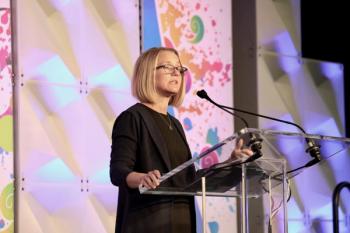
Jennifer Graves, MD, PhD, presented data at the CMSC annual meeting suggesting that secondary progressive disease might be more age-related than previously realized.
The combination of EDSS scores above 6 and age over 55 years resulted in higher serious infection rate that was nearly double that seen in the overall population.
In mixed-effect analyses adjusting for multiple cofounders, changes in inflammatory gene expression correlated inversely with changes in patient-reported stress, loneliness, hair cortisol, and aspects of interoceptive awareness.
Investigators observed significant correlations between processing speed and arterial stiffness among patients with multiple sclerosis, but not in healthy controls.
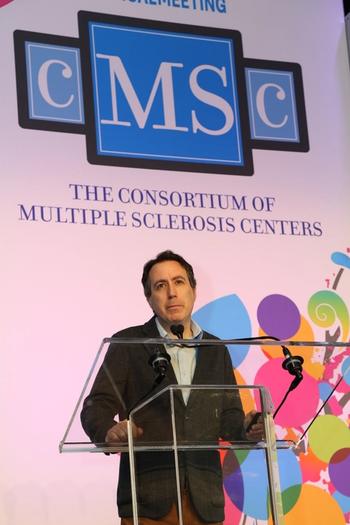
Andrew Solomon, MD, discussed inherent biases affecting MS diagnosis and how advances in imaging may help curb diagnostic errors.
Over the 96-week treatment period, ublituximab-treated patients outperformed teriflunomide-treated patients on several domains of the Fatigue Impact Scale.
Despite similar proportion of females and ever-smokers, age of onset of multiple sclerosis was significantly earlier for Latinx patients compared with White non-Latinx individuals.
Investigators observed significant decreases in Modified Fatigue Impact Scale and Fatigue Severity Scale with the low-fat diet in relation to controls.
The head of CRCSEP and coordinator of the Neurosciences Research Unit at Paris City University discussed the positive results of teriflunomide in treating radiologically isolated syndrome, a preclinical stage of multiple sclerosis. [WATCH TIME: 4 minutes]
The director of the James J. and Joan A. Gardner Family Center discussed data from the phase 3 BouNDless trial assessing a continuous, subcutaneous levodopa/carbidopa delivery system for patients with Parkinson disease experiencing motor fluctuations. [WATCH TIME: 3 minutes]
The consultant and founder of Accelerating NeuroVentures talked about the pridopidine arm from the HEALEY ALS Platform trial, which showed significant benefits in speech measures. [WATCH TIME: 5 minutes]