


MS and Demyelinating Disorders
Latest News
Advertisement
Latest Videos
CME Content


Advertisement
More News
Test your neurology knowledge with NeurologyLive®'s weekly quiz series, featuring questions on a variety of clinical and historical neurology topics. This week's topic is neuromuscular disorders.

High and low doses of frexalimab resulted in reductions of new or enlarging T2 lesions and total T1 gadolinium-enhancing lesions over a 3-month period.
Take 5 minutes to catch up on NeurologyLive®'s highlights from the week ending June 23, 2023.
Dr Krieger, Dr Brandstadter, and Dr Lublin discuss the advances made in recognizing and managing multiple sclerosis over the last few decades and the challenges that remain.

Compared with placebo, inebilizumab-treated participants showed attenuated biomarker elevation during attacks and reduced biomarker levels over time in the absence of adjudicated attacks.

Here's some of what is coming soon to NeurologyLive® this week.
Test your neurology knowledge with NeurologyLive®'s weekly quiz series, featuring questions on a variety of clinical and historical neurology topics. This week's topic is the history of the American Headache Society.
Decreased Microglial Activation Observed in Foralumab-Treated Patients With Secondary Progressive MS
A reduction in microglial activation was observed on the PET scans of most patients included. A phase 2 trial of the therapy was announced earlier this year and is still on track to begin sometime in the fall of 2023.
Dr Krieger, Dr Brandstadter, and Dr Lublin discuss the advances made in recognizing and managing multiple sclerosis over the last few decades and the challenges that remain.
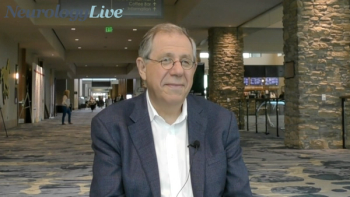
At CMSC 2023, the professor of psychiatry at the University of Toronto talked about cognitive behavioral therapy and mindfulness-based therapy that shows promise in alleviating fatigue in multiple sclerosis, offering potential treatment options. [WATCH TIME: 5 minutes]
Here's some of what is coming soon to NeurologyLive® this week.
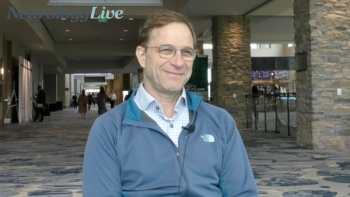
At CMSC 2023, the Melissa and Paul Anderson President’s Distinguished Professor of Neurology at the Perelman School of Medicine of the University of Pennsylvania, talked about the phase 2 trials that show promising results for BTK inhibitors as a potential MS therapy. [WATCH TIME: 4 minutes]
Test your neurology knowledge with NeurologyLive®'s weekly quiz series, featuring questions on a variety of clinical and historical neurology topics. This week's topic is Parkinson disease and related disorders.
Take 5 minutes to catch up on NeurologyLive®'s highlights from the week ending June 9, 2023.
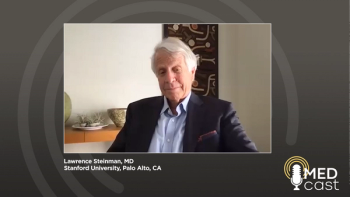
In this episode of MEDcast, expert neurologists delve into anti-CD20 disease modifying therapies (DMTs) in MS. They assess the correlation between clinical observations and immunological processes in MS patients, and also examine the role of the Epstein Barr virus in MS.
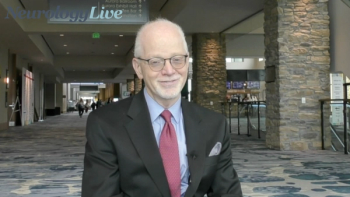
The professor of neurology at the University of Virginia discussed the progress made in recognizing and diagnosing neuromyelitis optica spectrum disorder through the discovery of specific monoclonal antibodies. [WATCH TIME: 5 minutes]
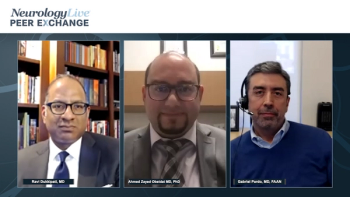
Ahmed Zayed Obeidat MD, PhD; Ravi Dukkipati, MD; and Gabriel Pardo, MD, FAAN, share key takeaways for clinicians treating RRMS.

Carolyn H. Goldschmidt, DO, a neurologist at NorthShore University Health System in Chicago, talked about a retrospective study analyzing disease-modifying therapies in multiple sclerosis patients at CMSC 2023.
Patients with multiple sclerosis who presented with high-stress maintained their stress management practice through later protocol sessions, according to a study a recent study.

At the 2023 CMSC Annual Meeting, Christopher C. Hemond, MD, assistant professor of neurology at UMass Chan Medical School, provided an overview of his study on mindfulness-based stress reduction in patients with MS using MRI and patient outcomes.
Here's some of what is coming soon to NeurologyLive® this week.
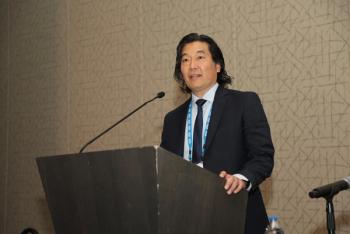
In the 2023 Donald Paty Lecture, speaker Darin Okuda presented novel MRI methods that might help determine whether MS lesions have potential for future remyelination.
Test your neurology knowledge with NeurologyLive®'s weekly quiz series, featuring questions on a variety of clinical and historical neurology topics. This week's topic is the history of the American Academy of Sleep Medicine.

Most patients completed at least 3 years of treatment, with no new safety signals observed and a treatment discontinuation rate of 5.3%.

The first results from a phase 2 study frexalimab (SAR441344; Sanofi), in relapsing multiple sclerosis have shown promise for the anti-CD40L antibody.
Advertisement
Advertisement
Trending on NeurologyLive - Clinical Neurology News and Neurology Expert Insights
1
Cladribine Tablets Show Ability to Improve or Stabilize Cognitive Function in Patients With Relapsing Multiple Sclerosis
2
Myelin Protective Small Molecule Lucid-MS Shows Promising Early-Stage Data in Healthy Volunteers
3
Using Human iPSC Models to Dissect PIRA Mechanisms in Progressive Multiple Sclerosis: Valentina Fossati, PhD
4
Phase 3b RESHAPE Study Evaluates Risk–Benefit of Switching From Ocrelizumab to BTK Inhibitor Remibrutinib
5