


MS and Demyelinating Disorders
Latest News
Advertisement
Latest Videos



CME Content


Advertisement
More News
Test your neurology knowledge with NeurologyLive®'s weekly quiz series, featuring questions on a variety of clinical and historical neurology topics. This week's topic is epilepsy and seizure disorders.

In a subgroup of individuals with secondary progressive MS, 50% of patients on mesenchymal stem cell-neural progenitor therapy improved muscle strength compared with 33% of those on placebo.
Take 5 minutes to catch up on NeurologyLive®'s highlights from the week ending May 5, 2023.

Teriflunomide, an FDA-approved therapy for relapsing forms of multiple sclerosis, resulted in an 62% risk reduction relative to placebo in preventing a first clinical event in patients with RIS.

Mind Moments®, a podcast from NeurologyLive®, brings you exclusive interviews with Michael H. Barnett, MBBS, PhD, FRACP; Nancy R. Foldvary-Schaefer, DO, FAAN; Sean J. Pittock, MD; Katherine W. Turk, MD; Erika U. Augustine, MD, MS; Jeffrey M. Statland, MD; and Chian-Chun Chiang, MD. [LISTEN TIME: 41 minutes]

A group of experts in the care of patients with neurological conditions—Ali Jannati, MD, PhD; Madhav R. Thambisetty, MD, PhD; Daniel Ontaneda, MD, PhD; Peter J. Goadsby, MD, PhD, DSc; Andrew Russman, DO—shared their perspectives on hot topics of treatment and management in neurology from the 2023 American Academy of Neurology Annual Meeting.
Higher adherence to Mediterranean Diet Adherence Screener independently predicted 20% lower risk for cognitive impairment among patients with MS.
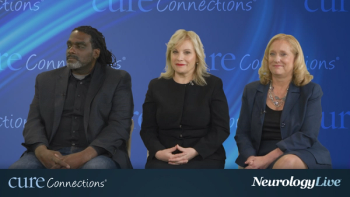
Gina Murdoch describes support programs that offer equipment, education, and services for the multiple sclerosis community.

Here's some of what is coming soon to NeurologyLive® this week.
The associate professor of neurology at the Cleveland Clinic Lerner College of Medicine of Case Western University provided commentary on the need for clinicians to be transparent with patients with MS about potential differences in disease course. [WATCH TIME: 3 minutes]
Neurology News Network for the week ending April 30, 2023. [WATCH TIME: 4 minutes]
Test your neurology knowledge with NeurologyLive®'s weekly quiz series, featuring questions on a variety of clinical and historical neurology topics. This week's topic is the history of the American Academy of Neurology.
Take 5 minutes to catch up on NeurologyLive®'s highlights from the week ending April 28, 2023.

Kimberly O’Neill, MD, pediatric neuroimmunology fellow at NYU Langone, discussed her presentation at the 2023 AAN Annual Meeting focused on cognitive similarities between pediatric and adult MS.
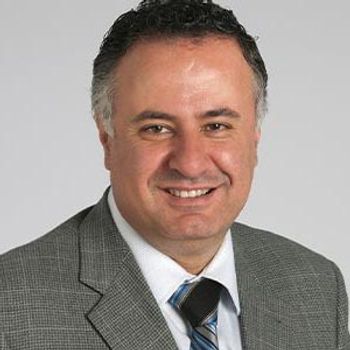
The director of Cleveland Clinic's Epilepsy Center at the Cleveland Clinic Neurological Institute shared his insight into the findings of the World Brain Study, 15 months after its initiation.
The head of the MS Center at Methodist Hospitals and assistant professor of neurology at Indiana University discusses the factors that affect the clinical care of LGBTQ+ patients with MS. [WATCH TIME: 4 minutes]

Inhibition of serum free complement 5 with ravulizumab was sustained throughout the treatment period according to a pharmacokinetics and pharmacodynamics analysis.
The associate professor of neurology at the Cleveland Clinic Lerner College of Medicine of Case Western University discussed a presentation at AAN 2023 characterizing the clinical and MRI features of Latinx with multiple sclerosis. [WATCH TIME: 4 minutes]

The treatment was superior in preventing on-trial relapse in both the monotherapy and immunosuppressive therapy groups compared with placebo in the CHAMPION-NMOSD trial.
Ravi Dukkipati, MD, and Gabriel Pardo, MD, FAAN, discuss barriers in accessing treatment for patients with RRMS, as well as a lack of appropriate biomarkers to monitor disease progression.
Giants of Multiple Sclerosis is a premier neuroscience award that celebrates pioneers, innovators, and difference makers who have been selected by their peers for their remarkable achievements in multiple sclerosis.
Experts in neurology review recent advances in the treatment landscape of relapse-remitting multiple sclerosis (RRMS) and the ever-present challenge of tailoring treatment to individual patients.
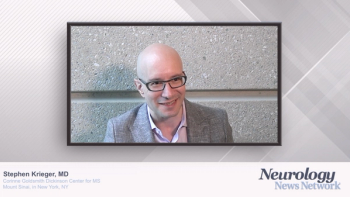
Multiple sclerosis expert Stephen Krieger, MD, discusses what can be inferred from the latest data on disease-modifying therapies as it pertains to cognition, and the importance of assessing cognitive performance over time.
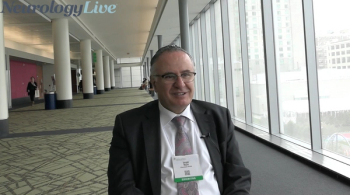
The director of Cleveland Clinic’s Epilepsy Center provided an update on the World Brain Study, a large-scale, longitudinal study aimed to observe the early, underlying changes in neurological disorders. [WATCH TIME: 9 minutes]

In single-ascending dose and multiple-ascending dose studies, no clinically meaningful changes were noted in hematology, chemistry, vital signs, or electrocardiogram parameters.
Advertisement
Advertisement
Trending on NeurologyLive - Clinical Neurology News and Neurology Expert Insights
1
Cladribine Tablets Show Ability to Improve or Stabilize Cognitive Function in Patients With Relapsing Multiple Sclerosis
2
Cladribine Maintains Efficacy, Safety Profile in Older Patients With Multiple Sclerosis
3
Myelin Protective Small Molecule Lucid-MS Shows Promising Early-Stage Data in Healthy Volunteers
4
CD40L Inhibitor Frexalimab Enters Phase 3 FREXITE Trial of Non-Relapsing Secondary Progressive Multiple Sclerosis
5