



Neuromuscular
Latest News

Nanopore Long-Read Sequencing Facilitates Diagnosis of Atypical Ataxia-Telangiectasia
Advertisement
Latest Videos






CME Content






Advertisement
More News

Expert neurologists share approaches to switching MG treatment due to either poor disease control or adverse events.
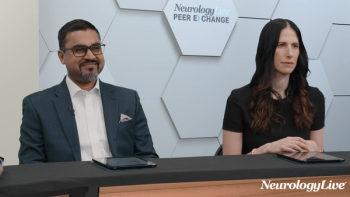
Experts in neurology review the varied routes of administration of targeted treatment in MG, highlighting intravenous and subcutaneous formulations and how they can provide more patient-centric care.

Here's some of what is coming soon to NeurologyLive® this week.
Test your neurology knowledge with NeurologyLive®'s weekly quiz series, featuring questions on a variety of clinical and historical neurology topics. This week's topic is on the sleep disorders.

The research grant aims to diversify Friedreich ataxia treatments, addressing challenges in trial design and therapeutic strategies for this condition.
Take 5 minutes to catch up on NeurologyLive®'s highlights from the week ending April 19, 2024.

Expert neurologists discuss the treatment algorithm of MG, focusing on the use of targeted therapies as well as barriers to their use.

Nicholas Silvestri, MD, FAAN, and Tuan Vu, MD, provide an overview of the current FDA-approved targeted therapies for the treatment of MG.

A phase 3b study showed that switching from intravenous C5 inhibitors to subcutaneous zilucoplan in patients with myasthenia gravis was associated with symptom improvement at 12 weeks.
Here's some of what is coming soon to NeurologyLive® this week.
Test your neurology knowledge with NeurologyLive®'s weekly quiz series, featuring questions on a variety of clinical and historical neurology topics. This week's topic is on the American Academy of Neurology Annual Meeting.

Patients on riliprubart demonstrated improvements on several measures of disability and impairment, including the INCAT, I-RODS, MRC-SS, and grip strength.
Neurology News Network. for the week ending April 13, 2024. [WATCH TIME: 3 minutes]
Take 5 minutes to catch up on NeurologyLive®'s highlights from the week ending April 12, 2024.

All 8 participants met prespecified responder criteria demonstrating either improvement or stabilization of disease according to both the Patient Reported Global Impression of Change and the Clinician Reported Global Impression of Change scales.

The new double-blind, placebo-controlled study includes approximately 200 patients with ALS who will undergo a single bone marrow aspiration procedure to procure the mesenchymal stem cells that will be used to manufacture each participant’s NurOwn treatment for the trial.

The chief of neurology and co-director of the Neurological Institute at the Children’s Hospital Los Angeles described some of the major resource and policy-level barriers for gene therapy in pediatric neurological conditions. [WATCH TIME: 6 minutes]
The executive vice president and chief research officer of the Muscular Dystrophy Association shared her reaction to the recent FDA approval of givinostat for Duchenne muscular dystrophy.

The first patient enrolled into the phase 1/2a ArthemiR trial assessing ATX-01 myotonic dystrophy type 1 is expected in the second quarter of 2024.
Experts in neurology highlight taking age and quality of life into consideration when approaching treatment of MG, as well as comment on the standard of care for patients.
Expert neurologists discuss the factors that guide treatment selection in MG, shifting the framework to take patient preferences into account.
The chief of neurology and co-director of the Neurological Institute at the Children’s Hospital Los Angeles discussed the hesitancy to enroll children with neurodevelopmental issues in early intervention trials without proven products or markers. [WATCH TIME: 5 minutes]
Here's some of what is coming soon to NeurologyLive® this week.
Test your neurology knowledge with NeurologyLive®'s weekly quiz series, featuring questions on a variety of clinical and historical neurology topics. This week's topic is on limb girdle muscular dystrophy.

The phase 1 study, dubbed PRO-101, assesses the safety, tolerability, pharmacokinetics, and pharmacodynamics of prosetin in both patients with ALS and healthy volunteers.
Advertisement
Advertisement
Trending on NeurologyLive - Clinical Neurology News and Neurology Expert Insights
1
Cladribine Tablets Show Ability to Improve or Stabilize Cognitive Function in Patients With Relapsing Multiple Sclerosis
2
Cladribine Maintains Efficacy, Safety Profile in Older Patients With Multiple Sclerosis
3
Myelin Protective Small Molecule Lucid-MS Shows Promising Early-Stage Data in Healthy Volunteers
4
CD40L Inhibitor Frexalimab Enters Phase 3 FREXITE Trial of Non-Relapsing Secondary Progressive Multiple Sclerosis
5