




Neuromuscular
Latest News
Advertisement
Latest Videos






CME Content





Advertisement
More News
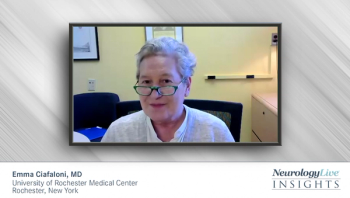
An expert on Duchenne muscular dystrophy reviews standard-of-care treatment options and provides clinical insights on adverse effects and safety concerns, particularly with corticosteroids.

in both the overall population and a per-procotol population, PrimeC-treated individuals experienced improvements on ALS Functional Rating Scale and increased survival compared with placebo.

Following the 12-week program, participants reported numerous physical and neuropsychiatric benefits in their daily living, such as increased energy level, better mood, and improvement in balance.

Panelists explore critical considerations when choosing a treatment approach for treatment-naïve adult patients with spinal muscular atrophy (SMA), taking into account factors such as disease severity, patient preferences, and potential treatment outcomes.
Key opinion leaders (KOLs) examine the mechanisms of action and other pertinent information regarding FDA-approved treatments for spinal muscular atrophy (SMA), sharing their perspectives on these therapies with a particular focus on the various modes of administration.

The newly added cohort allows for greater opportunity to treat patients earlier, with the hope of impacting disease course and preserving muscle.

Here's some of what is coming soon to NeurologyLive® this week.

Vitrisiran demonstrated a statistically significant reduction in the composite of all-cause mortality and recurrent cardiovascular events in both the overall population and those who received a monotherapy of vutrisiran without tafamidis.
Neurology News Network. for the week ending June 29, 2024. [WATCH TIME: 3 minutes]
Test your neurology knowledge with NeurologyLive®'s weekly quiz series, featuring questions on a variety of clinical and historical neurology topics. This week's topic is on epilepsy/Dravet syndrome.

After following patients for more than 10 years, arrhythmias were considered the most important cardiac predictor of survival, with progressive neurologic disability and diabetes mellitus identified as further major contributors.
Take 5 minutes to catch up on NeurologyLive®'s highlights from the week ending June 28, 2024.

The director of the OhioHealth ALS Clinic and vice chair of the ALS Association Care Services Committee discussed the upcoming ALS Nexus Conference and how themes of the event align with the direction of clinical care. [WATCH TIME: 3 minutes]

Anaya, a young woman with myasthenia gravis, discusses her challenges and triumphs living with a rare disease. She shares her personal story of advocacy and community, finding strength in the disease's impact on her independence and identity.

Additional data of a phase 2 study presented at the 2024 SLEEP Annual Meeting demonstrated that pitolisant significantly improved in secondary end points among patients with myotonic dystrophy type 1.
A neurology specialist offers clinical insights on communicating with patients about the diagnosis of Duchenne muscular dystrophy and discusses the important role of neuromuscular disease specialists.
Emma Ciafaloni, MD, provides an overview of the clinical presentation and diagnosis of Duchenne muscular dystrophy (DMD), highlighting the role of CK testing and the pathophysiology of the disorder.
Clinical experts in spinal muscular atrophy (SMA) address the issue of patient disengagement from healthcare services, which can occur due to a perceived lack of disease progression or stabilization, leading to undetected disease advancement and increased risk to patients, and provide recommendations for encouraging patients to re-engage with medical care.
Key opinion leaders (KOLs) further explore the transition of care from pediatric to adult healthcare systems for patients with spinal muscular atrophy (SMA), emphasizing the essential role of multidisciplinary support in ensuring a successful transition.
Here's some of what is coming soon to NeurologyLive® this week.
Neurology News Network. for the week ending June 22, 2024. [WATCH TIME: 4 minutes]
Test your neurology knowledge with NeurologyLive®'s weekly quiz series, featuring questions on a variety of clinical and historical neurology topics. This week's topic is on Alzheimer disease/dementia.

The therapy is the first and only neonatal Fc receptor blocker approved for the treatment of CIDP, and will be available as a once-weekly, 30- to 90-second subcutaneous injection.
Take 5 minutes to catch up on NeurologyLive®'s highlights from the week ending June 21, 2024.

The AAV vector-based gene therapy originally received FDA approval for treating ambulatory pediatric patients aged 4 to 5 years with Duchenne under the accelerated approval pathway.
Advertisement
Advertisement
Trending on NeurologyLive - Clinical Neurology News and Neurology Expert Insights
1
Cladribine Tablets Show Ability to Improve or Stabilize Cognitive Function in Patients With Relapsing Multiple Sclerosis
2
Myelin Protective Small Molecule Lucid-MS Shows Promising Early-Stage Data in Healthy Volunteers
3
Cladribine Maintains Efficacy, Safety Profile in Older Patients With Multiple Sclerosis
4
Using Human iPSC Models to Dissect PIRA Mechanisms in Progressive Multiple Sclerosis: Valentina Fossati, PhD
5