

The decision follows positive data from multiple trials, showing significant improvement in both cardiac function and muscle performance in patients with DMD.

Marco Meglio, Assistant Managing Editor for NeurologyLive, has been with the team since October 2019. Follow him on Twitter @marcomeglio1 or email him at [email protected]
The decision follows positive data from multiple trials, showing significant improvement in both cardiac function and muscle performance in patients with DMD.

Alexander disease, a rare leukodystrophy estimated to occur in 1 in 1 million patients in the United States, has no FDA-approved treatments to date.

Erik Musiek, MD, PhD, a professor of neurology at Washington University in St. Louis, provided clinical insight on a presentation from ANA 2024 highlighting the intricate relationship between circadian rhythms, glial activation, and neuroinflammation in Alzheimer disease.

In this episode, our panel of experts delves into the latest updates on spinal muscular atrophy diagnosis, focusing on the critical role of newborn screening, early intervention, and evolving classification methods for improved patient outcomes.

No serious adverse events were reported, and the therapy demonstrated a favorable safety profile over the 5-year study period.

Overall, vatiquinone-treated patients demonstrated persistent effects on disease progression over a 144-week long-term period, leading to a future regulatory submission.

RAG-18 is an saRNA delivered to muscle tissue to increase UTRN expression and compensate for DMD defects regardless of the location of mutation on DMD gene.

Patients aged 2-21 receiving apitegromab showed clinically meaningful motor function improvements, with a favorable safety profile consistent with long-term data, as Scholar Rock prepares for U.S. and EU regulatory submissions in Q1 2025.

Michelle Bravo, MD, an assistant professor of clinical neurology at the University of Miami, provided commentary on a rare case report of a subdural hematoma linked to spontaneous intracranial hypotension caused by a refractory CSF leak.
Over half of the patients (56.7%) discontinued at least one class of acute migraine medication within 12 months post-erenumab initiation.
Test your neurology knowledge with NeurologyLive®'s weekly quiz series, featuring questions on a variety of clinical and historical neurology topics. This week's topic is on insomnia.

The phase 2 study, expected to include 575 patients with acute migraine, will use percentage of participants with freedom from pain and freedom from the most bothersome symptom as the coprimary end points.

Over a 12-month period, patients showed sustained improvements in disease progression through valbenazine, regardless of concomitant antipsychotic treatment.

Mind Moments®, a podcast from NeurologyLive®, brings you an exclusive interview with Daniel Ontaneda, MD, PhD. [LISTEN TIME: 27 minutes]

The KINETIC 2 study did not show statistically significant improvement in essential tremor symptoms compared to placebo, leading to the termination of its development for this condition.

This trial aims to explore the role of the noradrenergic system in behavioral and cognitive outcomes and could lead to new therapeutic strategies for managing PSP.

ION464 is designed to inhibit the production of the alpha-synuclein protein, aiming to reduce the accumulation of this protein in the brain, which is believed to be a key factor driving neurodegeneration in MSA and Parkinson disease.

The consultant neurologist and senior lecturer at St. Georges Hospital in London, provided commentary on the diagnosis, management, and future research around neuropsychiatric symptoms of Parkinson disease.

ELATE, a multicenter, randomized, double-blind, placebo-controlled trial, aims to address the limitations of current oral therapies by exploring a targeted, localized treatment option.

Kelly Brazzo, founder and CEO of CureLGMD2i Foundation, and Dennis Akkaya, chief Commercial Officer at MyTomorrows, share insight on a new partnership that aims to ease accessibility to drug development trials for patients with LGMD.
In a post hoc analysis of the COSMOS study, 24-hour LCIG infusion led to a reduction in nocturnal and morning akinesia, though many patients continued to rely on nighttime add-on medications.

While participants responded positively to nutritional guidance and the Mediterranean diet, they expressed negative views on the ketogenic diet due to its restrictive nature, social impracticality, and gastrointestinal side effects of MCT oil.
Patients reported increased good ON time and improved confidence in daily activities while experiencing a lower treatment burden compared to their previous medication regimens.
Test your neurology knowledge with NeurologyLive®'s weekly quiz series, featuring questions on a variety of clinical and historical neurology topics. This week's topic is on cryptogenic stroke.

Lu AF84222 was considered well tolerated, with greater treatment effects observed in a subgroup of patients with less impaired multiple system atrophy.

Despite showing no differences vs placebo on the primary end point of gait parameters, TAK-071-treated patients demonstrated significant improvements in global cognition score.

Change from baseline in Myasthenia Gravis Activities of Daily Living score was statistically significant for inebilizumab-treated patients and the therapy showed a safe and well-tolerated profile without new safety signals.

Tim Miller, MD, director of functional neurosurgery at the Marcus Neuroscience Institute, Baptist Health, provided commentary on the use of HIFU as a non-invasive treatment for patients with essential tremor and specific types of Parkinson disease.

Results from the phase 3 TEMPO-2 trial, an additional study assessing tavapadon as a flexible-dose monotherapy, are expected by the end of this year.
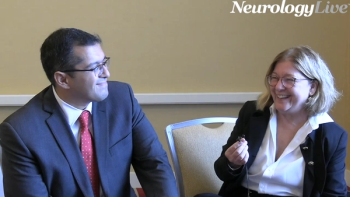
A pair of neurologists from the University of California, Irvine, detailed some of the training and career focuses of large federal agencies in effort to address the shortage of neurologists. [WATCH TIME: 4 minutes]