

A recent trial showed that post-stroke patients using a socially assistive robot (SAR) for upper-extremity rehab achieved significant motor function improvements, with 100% meeting or exceeding minimal clinical improvements.

Marco Meglio, Assistant Managing Editor for NeurologyLive, has been with the team since October 2019. Follow him on Twitter @marcomeglio1 or email him at [email protected]
A recent trial showed that post-stroke patients using a socially assistive robot (SAR) for upper-extremity rehab achieved significant motor function improvements, with 100% meeting or exceeding minimal clinical improvements.

Mind Moments®, a podcast from NeurologyLive®, brings you an exclusive interview with Phil Jochelson, MD. [LISTEN TIME: 20 minutes]

Scholar Rock's TOPAZ phase 2 trial shows sustained motor function improvements in SMA patients treated with apitegromab over 48 months, with phase 3 results expected soon.

Anavex Life Sciences intends to submit a full regulatory application for blarcamesine as a potential treatment for AD in Europe by Q4 2024.

Marketed as Crexont, the combination extended- and immediate-release treatment is indicated for treatment of PD, and is anticipated to be available in the United States in September 2024.

The positive data from this Phase 1a trial will inform the dosing for the upcoming Phase 1b portion in patients with AD, expected to commence in the second half of 2024.

The personalized medicine lead at Linus Health provided clarity on a new outcome measure that captures various perspectives about what matters to individuals and their brain health.

In pediatric patients, the average treatment intensity was 22.8% of the maximum stimulator intensity, with slightly lower intensity levels compared to previous studies in adolescents and adults.

MoMeNtum will evaluate the efficacy and safety of DNTH103, administered subcutaneously every two weeks over a 17-week period, followed by a 52-week open-label extension to collect additional safety and efficacy data.

Lecanemab, an antiamyloid medication, was previously approved for the treatment of AD in the US in June 2023.

Known as REVITALYZ, the double-blind, placebo-controlled study will assess the effect of once-nightly sodium oxybate on the primary end point of change in Epworth Sleepiness Scale over a 14-week period.
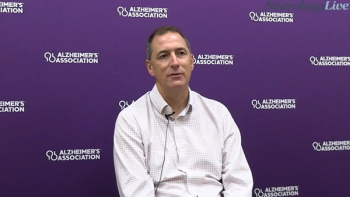
The professor of neurology and Diana Davis Spencer Foundation Chair at the Jackson Laboratory provided context on a presentation from AAIC 2024 highlighting the ways genetics can impact microglia function and its relation to Alzheimer disease. [WATCH TIME: 3 minutes]
Test your neurology knowledge with NeurologyLive®'s weekly quiz series, featuring questions on a variety of clinical and historical neurology topics. This week's topic is on disparities on stroke.

In addition to showing a slowed disease progression, TPN-101-treated patients had lowered levels of key biomarkers involving neurodegeneration and neuroinflammation.

The meeting with the American Neurologic Association fosters collaboration, networking, and joint sessions, enhancing knowledge sharing among academic neurologists.

Enrollment in the dose level 2 expansion cohort is expected to complete early in Q3 2024, with initial strength and functional data anticipated in the second half of 2024.

The 3-year data highlighted the safety profile of lecanemab and its disease-modifying effects on tau accumulation and other biomarkers related to AD pathology.
In this episode, the panel discusses the emerging challenges for neurology departments, the shortage of neurologists, and the ways to disseminate between useful and useless information amid a busy career.

Although the primary endpoint of cerebral glucose metabolic rate change was not met, secondary endpoints showed significant benefits in brain volume and cognitive measures, further supporting the potential of GLP-1 agonists in AD.

CT1812, a sigma-2 receptor ligand, showed favorable changes in biomarkers like Aß40, Aß42, and neurofilament light (NfL), indicating its potential as a synaptoprotective agent.

Higher MIND diet scores correlate with larger hippocampal volume in older adults, suggesting potential benefits for brain health.
John England, MD, and Lisa Merlin, MD, commented on the significant changes to neurology over the years and how education aligns with the latest in treatments advancements and understanding of neurological disorders.

To ensure participant safety, all boys who received the gene therapy in the clinical program will be followed up for long-term safety monitoring.
The duo provided insight on a number of key sessions clinicians and neurology educators should attend at the upcoming AUPN Annual Meeting.

A small clinical trial showed RG6289 dose-dependently altered amyloid-ß monomers in CSF, supporting its development for Alzheimer's disease.

In Latino individuals, larger household size negatively affects MoCA scores, while higher education positively impacts cognitive outcomes, per SERVE OC trial data.

Over a 6-month treatment period, changes in apathy for methylphenidate-treated patients were not associated with performance on the remaining cognitive tests.
Panelists John England, MD, FAAN, and Lisa Merlin, MD, discuss the main objectives of the upcoming AUPN Annual Meeting, set to take place September 14th in Orlando, Florida.

The chief medical officer at Eisai provided context towards the ongoing initiatives to further the efficacy and safety profile of lecanemab, an FDA-approved treatment for early Alzheimer disease. [WATCH TIME: 3 minutes]

The trial will use phase 2a to determine the optimal dosage while phase 2b will assess efficacy and long-term safety of the optimized dose against a placebo arm.