

After 28 days of treatment, bezisterim showed pronounced effects on measures of the Non-Motor Symptom Scale, as well as greater achievement of ON time than levodopa alone.

Marco Meglio, Assistant Managing Editor for NeurologyLive, has been with the team since October 2019. Follow him on Twitter @marcomeglio1 or email him at [email protected]
After 28 days of treatment, bezisterim showed pronounced effects on measures of the Non-Motor Symptom Scale, as well as greater achievement of ON time than levodopa alone.
Test your neurology knowledge with NeurologyLive®'s weekly quiz series, featuring questions on a variety of clinical and historical neurology topics. This week's topic is on stroke and large hemispheric infarction.

In a subgroup of patients who underwent endovascular thrombectomy in addition to IV glibenclamide, results showed improved functional outcomes favoring active treatment, coupled with greater reductions in mortality.

Biogen's tofersen, an antisense oligonucleotide, remains the first and only marketed therapy to treat patients with SOD1-mutated amyotrophic lateral sclerosis.

Daridorexant, an FDA-approved dual orexin receptor antagonist, had a dose-response relationship observed at month 1 on all 4 efficacy end points for all doses tested.

The pulmonologist at Rush Health and immediate past president of the American Academy of Sleep Medicine provided perspective on some of the intriguing changes to sleep medicine and where the field is headed in the coming years.

Assessing doses of 3 mg doxepin, results revealed non-statistically significant improvements in latency to sleep onset and latency to persistent sleep that were observed across patients above and at or below the median baseline values.

A phase 3 trial plans to investigate the efficacy and safety of AD109, a novel oral medication, for treating obstructive sleep apnea in patients who cannot tolerate continuous positive airway pressure therapy.

Regardless of whether patients were treatment-naïve or taking alerting agents, the safety profile of low-sodium oxybate remained true, with treatment-emergent adverse events attributing to less than 4% of study discontinuations.
Overall, most patients reported satisfaction with cognitive behavioral therapy approach, with completion of lessons associated with a decrease in Fatigue Severity Scale.

Those on low-sodium oxybate, regardless of psychiatric comorbidity status, outperformed placebo on a number of outcomes, including Epworth Sleepiness Scale and weekly cataplexy attacks.

A majority of the small cohort of patients with SMA did not need a polysomnogram at 1 year because respiratory pathology was not a concern, attributable to improvements from disease-modifying therapies.

After 5 weeks of open-label treatment, KP1077-treated patients showed mild adverse events that were typical for a central nervous system stimulant.
Test your neurology knowledge with NeurologyLive®'s weekly quiz series, featuring questions on a variety of clinical and historical neurology topics. This week's topic is on amyotrophic lateral sclerosis (ALS).

Study establishes protocols for ublituximab use in breastfeeding patients with MS, enhancing treatment decision-making.

The phase 3 trials are expected to assess the therapeutic potential of frexalimab dosed every 4 weeks in both patients with relapsing MS and non-relapsing secondary progressive MS.

In comparison with adults on ocrelizumab, pediatric patients experienced no clinical relapses and a safety profile that was similar to what was previously observed.

Mind Moments®, a podcast from NeurologyLive®, brings you an interview with Katherine Peters, PhD. [LISTEN TIME: 13 minutes]

Within a subgroup of those older than 50 years, most patients who switched to cladribine were relapse free at follow-up, with no new safety signals observed.

Mike Hooven, chairman and CEO of Enable Injections, and Randall Moreadith, MD, PhD, chief development officer of Serina Therapeutics, provided insight on the development plans of SER-252, an investigational apomorphine therapy for advanced Parkinson disease.

The newly added tablet strengths allow for greater flexibility when selecting or adjusting dosing for deutetrabenazine.

Over a 24-month treatment period, patients on cladribine demonstrated no axonal loss evident on OCT, with reductions in cerebrospinal fluid neurofilament light and impacts on oligoclonal bands.
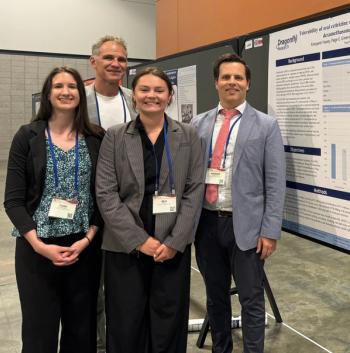
Nearly half of patients on diphenhydramine, dexamethasone, and famotidine experienced moderate to severe decreased alertness vs only 12.9% of those on cetirizine, dexamethasone, and famotidine.

Over a 5-year treatment period, patients on ofatumumab, regardless of race or ethnicity, demonstrated significant reductions in neurofilament light and achieved consistent rates of NEDA-3.

Howard Rosen, chief executive officer of the American Headache Society, provided commentary on the upcoming annual meeting and the unique types of educational sessions clinicians can look forward to.
Overall, the results mirrored previous reports demonstrating that patients on ocrelizumab before or during pregnancy did not have elevated risk of adverse pregnancy and infant outcomes.

Following the mixed results, NS Pharma is working with the FDA to determine how to proceed with viltolarsen.

Scott Newsome, DO, director of the Stiff Person Syndrome Center and professor of neurology at Johns Hopkins Medicine, provided clarity on the 1-year data of the OCARINA II study assessing subcutaneous ocrelizumab.

Overall, a significantly greater amount of patients on Andexanet had hematoma volume expansion of 35% or less; however, these patients had greater risk of thrombolytic events and lower modified Rankin scale scores at 30 days.
Test your neurology knowledge with NeurologyLive®'s weekly quiz series, featuring questions on a variety of clinical and historical neurology topics. This week's topic is on Myelin oligodendrocyte glycoprotein antibody-associated disease (MOGAD).