


MS and Demyelinating Disorders
Latest News
Advertisement
Latest Videos



CME Content


Advertisement
More News
Jeffrey Dunn, MD, and Regina Berkovich, MD, PhD, discuss rates of postpartum relapse in patients with multiple sclerosis and how they approach this topic with their patients.
Heidi Crayton, MD, expresses her optimism for the future of multiple sclerosis and highlights emerging therapies and their impact on the care of patients with multiple sclerosis.
Dr Heidi Crayton reviews the potential impact of vaccinations on immunosuppressive disease-modifying therapy efficacy in patients with multiple sclerosis.
Jacqueline Nicholas, MD, provides insight into challenges inherent to the assessment of brain health in patients with multiple sclerosis [MS].
Heidi Crayton, MD, shares a patient story to highlight the importance of imaging modalities in identifying brain loss and atrophy in patients with multiple sclerosis [MS].
The chair of Cleveland Clinic’s Department of Physical Medicine provided commentary on the goals for the newly approved EksoNR robotic exoskeleton in rehabilitative efforts for patients with multiple sclerosis.
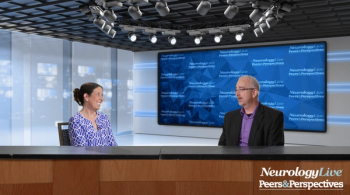
Scott Newsome, DO, and Ellen Mowry, MD, discuss the ongoing TREAT-MS trial and its goals, the importance of the findings for clinical practice in multiple sclerosis, and the ongoing discussion around induction vs escalation in MS treatment. [WATCH TIME: 24 minutes]

Here's what is coming soon to NeurologyLive®.
Test your neurology knowledge with NeurologyLive®'s weekly quiz series, featuring questions on a variety of clinical and historical neurology topics. This week's topic is stroke and cerebrovascular disease.
Neurology News Network for the week ending July 9, 2022. [WATCH TIME: 4 minutes]
Take 5 minutes to catch up on NeurologyLive®'s highlights from the week ending July 8, 2022.
Expert clinicians offer their insight on the sleep disorder landscape, the state of mental health in pediatric migraine, an inaugural movement disorders congress, a novel stroke rehabilitation tool, and psychedelics in cluster headache.
Ahmed Obeidat, MD, PhD, comments on other viruses that have been linked to the development of multiple sclerosis and discusses how they can be both protective and detrimental.

Amit Bar-Or, MD, FRCPC, and Bridget A. Bagert, MD, share their opinions on the role the Epstein-Barr virus plays in the development of multiple sclerosis, highlighting recent publications examining this link.

The director of the Mayo Clinic Center for Multiple Sclerosis and Autoimmune Neurology provided insight on a unique way the institution cares for patients who present with an inflammatory or autoimmune entity. [WATCH TIME: 5 minutes]
Drs Jeffrey Dunn and Regina Berkovich provide insight into the biochemistry and reversibility of currently available S1P treatments for patients with multiple sclerosis.
Experts in neurology comment on factors relating to treatment selection in pregnancy for women with multiple sclerosis; highlighting efficacy and reversibility considerations of disease-modifying therapies.
Chaired by Stephen Krieger, MD, the presentations also feature Mount Sinai experts Erin Beck, MD, PhD; James Sumowski, PhD; and Ilana Katz Sand, MD. [WATCH TIME: 1 hour, 34 minutes]
Heidi Crayton, MD, comments on cognitive and brain health considerations in patients with multiple sclerosis and shares her experiences with both patients and their caregivers.
An expert in neurology provides insight into the considerations of oral versus injectable therapies in patients with multiple sclerosis, highlighting their impact on quality of life, brain volume, and cognitive health.
Experts in neurology comment on the level of patient awareness surrounding cognitive decline in multiple sclerosis and highlight how to engage patients in difficult conversations regarding their cognitive health.
Heidi Crayton, MD; Jacqueline Nicholas, MD; and Flavia Nelson, MD, share their practices and diagnostic assessments for cognitive decline in their patients with multiple sclerosis.

Dr DeLuca shares his advice and recommendations from National MS Society on providing cognitive care for patients suffering from MS.
Multiple sclerosis expert, Dr DeLuca, shares study design and clinical data on the association between brain volume and long-term cognition in patients with relapsing MS.
The chair of Cleveland Clinic’s Department of Physical Medicine discussed a new rehabilitative approach using a robotic exoskeleton to improve fatigue and gait in patients with multiple sclerosis.
Advertisement
Advertisement
Trending on NeurologyLive - Clinical Neurology News and Neurology Expert Insights
1
Cladribine Tablets Show Ability to Improve or Stabilize Cognitive Function in Patients With Relapsing Multiple Sclerosis
2
Myelin Protective Small Molecule Lucid-MS Shows Promising Early-Stage Data in Healthy Volunteers
3
Using Human iPSC Models to Dissect PIRA Mechanisms in Progressive Multiple Sclerosis: Valentina Fossati, PhD
4
Phase 3b RESHAPE Study Evaluates Risk–Benefit of Switching From Ocrelizumab to BTK Inhibitor Remibrutinib
5