






MS and Demyelinating Disorders
Latest News
Advertisement
Latest Videos







CME Content






Advertisement
More News

The oral S1P1 modulator joins a number of other agents in its class, and has also been submitted to the European Medicines Agency for approval in the treatment of MS.

The neurologist from Massachusetts General Hospital discussed when to prescribe disease-modifying therapy and some challenges in caring for patients with RIS.

Age, sex, EDSS score, and recent methylprednisolone use were all identified as risk factors for developing severe COVID-19.
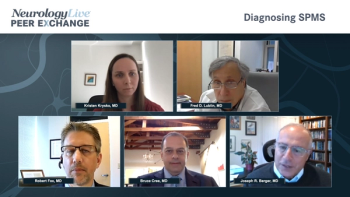
An overview of the criteria used to diagnose relapsing-remitting multiple sclerosis when it converts to secondary progressive multiple sclerosis.

A panel of experts led by Bruce Cree, MD, highlight the clinical subtypes of multiple sclerosis including presentation and prevalence.

The fellow of autoimmune neurology at Massachusetts General Hospital discussed the need for follow-up with patients long-term after TNFα inhibitor treatment.

The postdoctoral researcher at Columbia University detailed a number of topics regarding the impact concealing multiple sclerosis diagnosis can have on a patient.

Ishu Arpan, PhD, senior research associate at Oregon Health & Science University, also discussed further studies she would like to see conducted in MS falls.

Alise Carlson, MD, a resident at Cleveland Clinic, discussed her presentation from ACTRIMS Forum 2021 on the misdiagnosis of adult-onset genetic leukodystrophies as multiple sclerosis.

Persons with pediatric-onset MS received higher rates of disability benefits, sickness absence days in their youngest age period, and disability pension days in their oldest age period than those without MS.

The postdoctoral researcher at Columbia University discussed her abstract from ACTRIMS Forum 2021 on the associations of MS diagnosis disclosure and concealment with anxiety and depression.

Here's what is coming soon to NeurologyLive.

In assessing patients treated with siponimod, researchers also saw that plasma neurofilament light levels slightly predicted a reduced risk of disease worsening.

Students share their experience in the virtual classroom, navigating new requirements, and the lessons learned from their position in a global pandemic.

The partnership is aiming to develop a novel approach to damage repair in multiple sclerosis from a number of potential drug candidates.

Neurology News Network for the week ending March 13, 2021.
Take 5 minutes to catch up on NeurologyLive's highlights from the week ending March 12, 2021.

The senior investigator at the National Institutes of Neurological Disorders and Stroke discussed 2 treatments currently being evaluated for use in multiple sclerosis.

The assistant professor of neurology at Mayo Clinic detailed the areas of autoimmune encephalitis research that need more attention, as well as the diagnostic potential of autoantibody assays.

The neurologist from the University of Washington Medical Center discussed how the study of natalizumab adverse events came about and the importance of this monitoring period.

Researchers found that GCIPL thickness, along with disease duration of at least 9 years at baseline, were associated with the highest odds of EDSS worsening.

The retrospective analysis in patients aged 55 years and older underlines the importance of testing different patient populations.

The PhD candidate at the neuroimmunology laboratory at Memorial University of Newfoundland discussed further research she would like to see conducted with IL-1RA in MS.

The chair of the Department of Neurology and the director of the Neuroscience Research Institute at The Ohio State University discussed the takeaways from his lecture at ACTRIMS Forum 2021.

Researchers found that, in an exploratory analysis of 150 patients, African American patients with MS were most likely to become disabled and lose employment.
Advertisement
Advertisement
Trending on NeurologyLive - Clinical Neurology News and Neurology Expert Insights
1
Cladribine Tablets Show Ability to Improve or Stabilize Cognitive Function in Patients With Relapsing Multiple Sclerosis
2
Cladribine Maintains Efficacy, Safety Profile in Older Patients With Multiple Sclerosis
3
Myelin Protective Small Molecule Lucid-MS Shows Promising Early-Stage Data in Healthy Volunteers
4
Using Human iPSC Models to Dissect PIRA Mechanisms in Progressive Multiple Sclerosis: Valentina Fossati, PhD
5