



MS and Demyelinating Disorders
Latest News
Advertisement
Latest Videos




CME Content



Advertisement
More News

The associate professor of Neurology at the Cleveland Clinic Lerner College of Medicine of Case Western Reserve University discussed the findings of his presentation at AAN 2021.

Tanuja Chitnis, MD and Lauren B. Krupp, MD give insight into the future of pediatric multiple sclerosis by discussing unmet needs and advice for community neurologists.

The staff neurologist at the Mellen Center for Multiple Sclerosis Treatment and Research at Cleveland Clinic spoke to a study using the digital Manual Dexterity Test.
Robert Fox, MD, of the Cleveland Clinic, comments on the advantage of starting treatment with a high-efficacy therapy for relapsing-remitting multiple sclerosis and explains his approach to counseling patients when selecting treatment.
Dr Patricia K. Coyle, of the Stony Brook Neurosciences Institute, comments on her approach to selecting first-line therapy to treat relapsing-remitting multiple sclerosis, explaining how she selects between a lower-risk or high-efficacy therapy.
Before first diagnosis, patients with multiple sclerosis had more frequent encounters with medical doctors of different specialties compared to matched controls.
The importance of utilizing support from family and friends when managing multiple sclerosis.
Experience with cannabis use for treatment of pain, spasms, and anxiety due to multiple sclerosis is shared by Dr Picone and her patient Richard.

Here's what is coming soon to NeurologyLive.
The associate professor of neurology and neurologist at Duke University provided insight on the unique mechanism of nipocalimab and its effect on patients with myasthenia gravis.

Cladribine, which was represented in the highest proportion of patients developing protective SARS-CoV-2 antibody response among other DMTs, had humoral response findings independent of lymphocyte count.

Neurology News Network for the week ending May 1, 2021.
Take 5 minutes to catch up on NeurologyLive's highlights from the week ending April 30, 2021.

NMOSD is associated with elevated levels of the pleiotropic cytokine interleukin-6, making the cytokine an apt therapeutic target.

The Vice-Chair for Research at the Cleveland Clinic Neurological Institute discussed topline results from the EMPhASIS trial of IMU-838.
"Mind Moments," a podcast from NeurologyLive, brings you exclusive interviews with Stephanie J. Nahas, MD; Bruce Cree, MD, PhD, MAS; Sana Somani, MD, MBBS; Hubert Fernandez, MD; Daniel Ontaneda, MD, PhD; and Richard Gershon, PhD.
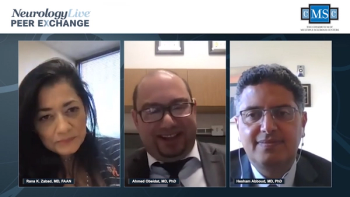
Join Ahmed Obeidat, MD, PhD; Hesham Abboud, MD, PhD; and Rana K. Zabad, MD, FAAN, for perspectives on how the diagnostic criteria for multiple sclerosis have evolved over time.

Just weeks after receiving an EU marketing authorization, the FDA has issued a complete response letter to Biogen for its sBLA related to the subcutaneous administration of natalizumab (Tysabri).
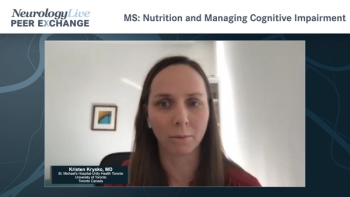
The importance of proper nutrition as a therapy for symptom control in multiple sclerosis and some strategies to manage cognitive impairment.
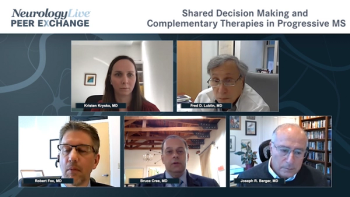
Joseph R. Berger, MD, elaborates on the importance of shared decision making in the treatment of multiple sclerosis and how it relates to complementary and natural therapies for symptom control.

The Ralph and Luci Schey Chair and Director of the Schey Center for Cognitive Neuroimaging at Cleveland Clinic, outlined the different tests that make up the MSPT battery.

Researchers also found that EDSS score pre-pregnancy was associated with the likelihood of post-partum relapse for patients with multiple sclerosis.

The senior investigator at the National Institutes of Neurological Disorders and Stroke spoke about new opportunities for research into brain lesions and microglia.
Expert neurologists discuss drugs in development for pediatric multiple sclerosis and consider the potential for biomarkers to monitor treatment response or new disease activity in the future.
Lauren B. Krupp, MD considers how treatment failure in pediatric multiple sclerosis may be defined as disease relapse, new or enlarging legions, inability to tolerate treatment, or lack of adherence.
Advertisement
Advertisement
Trending on NeurologyLive - Clinical Neurology News and Neurology Expert Insights
1
Cladribine Tablets Show Ability to Improve or Stabilize Cognitive Function in Patients With Relapsing Multiple Sclerosis
2
Myelin Protective Small Molecule Lucid-MS Shows Promising Early-Stage Data in Healthy Volunteers
3
Cladribine Maintains Efficacy, Safety Profile in Older Patients With Multiple Sclerosis
4
Using Human iPSC Models to Dissect PIRA Mechanisms in Progressive Multiple Sclerosis: Valentina Fossati, PhD
5